

Spicy Korean Kimchi Recipe for Beginners
You know that one food that sneaks into your fridge and suddenly ends up on everything? That’s kimchi. I started making it after paying way too much for tiny jars at the grocery store. One batch later, I understood the obsession.
This Kimchi Recipe recipe gives you bold flavor, crunchy texture, and enough spicy goodness to wake up boring meals. Plus, homemade kimchi makes your kitchen smell like a Korean food market for a day. Your neighbors might panic a little, but trust the process.
Why Everyone Loves Kimchi
Kimchi packs heat, tang, crunch, and deep umami flavor into one bite. Honestly, regular cabbage feels lazy after this.
People love kimchi because it works with almost everything:
- Rice bowls
- Noodles
- Fried rice
- Grilled cheese
- Eggs
- Tacos
- Soup
Have you ever eaten cold kimchi straight from the jar at midnight? No judgment here.
Kimchi Dishes keep growing in popularity because they feel exciting without needing fancy cooking skills. That’s the magic.
What Is Kimchi Exactly?
Kimchi comes from Korea and usually includes fermented napa cabbage with chili flakes, garlic, ginger, and seasonings. Koreans have made it for centuries because fermentation preserves vegetables naturally.
The cool part? Every family has their own version. Some recipes taste sweeter. Others burn your eyebrows off. Variety keeps things fun.
This guide focuses on an Authentic Kimchi Recipe with simple ingredients and easy instructions.
Servings and Preparation Time
- Servings: 12
- Prep Time: 45 minutes
- Salting Time: 2 hours
- Fermentation Time: 2–5 days
- Total Time: About 3 days
Yeah, fermentation takes patience. Great things rarely happen instantly. Except pizza delivery.
Ingredients for the Best Kimchi Recipe
Here’s everything you need for this Home Made Kimchi Recipe.
Main Ingredients
- 1 large napa cabbage, about 2 pounds
- 1/2 cup sea salt
- 4 cups water
- 1 medium daikon radish, julienned
- 4 green onions, chopped
Kimchi Paste Ingredients
- 5 tablespoons Korean red pepper flakes (gochugaru)
- 1 tablespoon sugar
- 1 tablespoon soy sauce
- 1 tablespoon fish sauce
- 6 garlic cloves, minced
- 1 tablespoon grated ginger
- 1 small pear, grated
- 2 tablespoons rice flour
- 1/2 cup water
Vegan Option
Want a Kimchi Recipe Vegan version?
Replace fish sauce with:
- Soy sauce
- Miso paste
- Coconut aminos
Boom. Easy.
Why These Ingredients Matter
Napa Cabbage
Napa cabbage creates that classic crunchy texture. Regular cabbage works, but napa absorbs flavor better.
Gochugaru
This Korean chili flake gives kimchi its signature color and smoky heat. Don’t replace it with random chili powder unless you enjoy culinary chaos.
Pear
The pear adds subtle sweetness and helps fermentation. IMO, this tiny ingredient changes everything.
Fish Sauce
Fish sauce adds deep umami flavor. It smells aggressive alone, but magic happens during fermentation.
How To Cook Kimchi: Step-by-Step Guide
Making kimchi sounds intimidating until you actually try it. Then you realize fermentation mostly means “put vegetables in a jar and wait.”
Step 1: Cut the Cabbage
Slice the napa cabbage lengthwise into quarters.
Cut away the hard core section.
Chop the cabbage into bite-sized pieces. Don’t make them tiny. Kimchi shrinks slightly during fermentation.
Place the cabbage into a large bowl.
Step 2: Salt the Cabbage
Mix water and sea salt in the bowl.
Massage the salt into the cabbage thoroughly. Every leaf needs attention here.
Leave the cabbage for two hours.
Turn it every 30 minutes so everything softens evenly. Yes, this part feels annoying. Yes, it matters.
The cabbage should bend easily when ready.
Step 3: Rinse and Drain
Rinse the cabbage under cold water three times.
Drain it well for at least 20 minutes.
Too much water weakens the flavor. Soggy kimchi disappoints everyone.
Step 4: Make the Kimchi Paste
Add rice flour and water to a small pan.
Cook over medium heat until thickened slightly.
Let it cool for five minutes.
Now mix in:
- Gochugaru
- Garlic
- Ginger
- Fish sauce
- Sugar
- Soy sauce
- Grated pear
The mixture should look fiery red and smell incredible.
Or terrifying. Depends on your spice tolerance.
Step 5: Mix Everything Together
Put the cabbage into a large mixing bowl.
Add radish and green onions.
Pour the kimchi paste over everything.
Now use gloves and massage the paste into every piece. Seriously, wear gloves unless you enjoy spicy fingerprints in your eyeballs later.
Coat everything evenly.
Step 6: Pack the Jar
Transfer the kimchi into clean glass jars.
Press the mixture down firmly to remove air pockets.
Leave about one inch of space at the top.
Fermentation creates bubbles, and exploding kimchi jars ruin moods fast.
Step 7: Ferment the Kimchi
Leave the jar at room temperature for 2–5 days.
Open the lid once daily to release pressure.
Taste it every day.
Want milder kimchi? Refrigerate earlier.
Want stronger tang? Let it ferment longer.
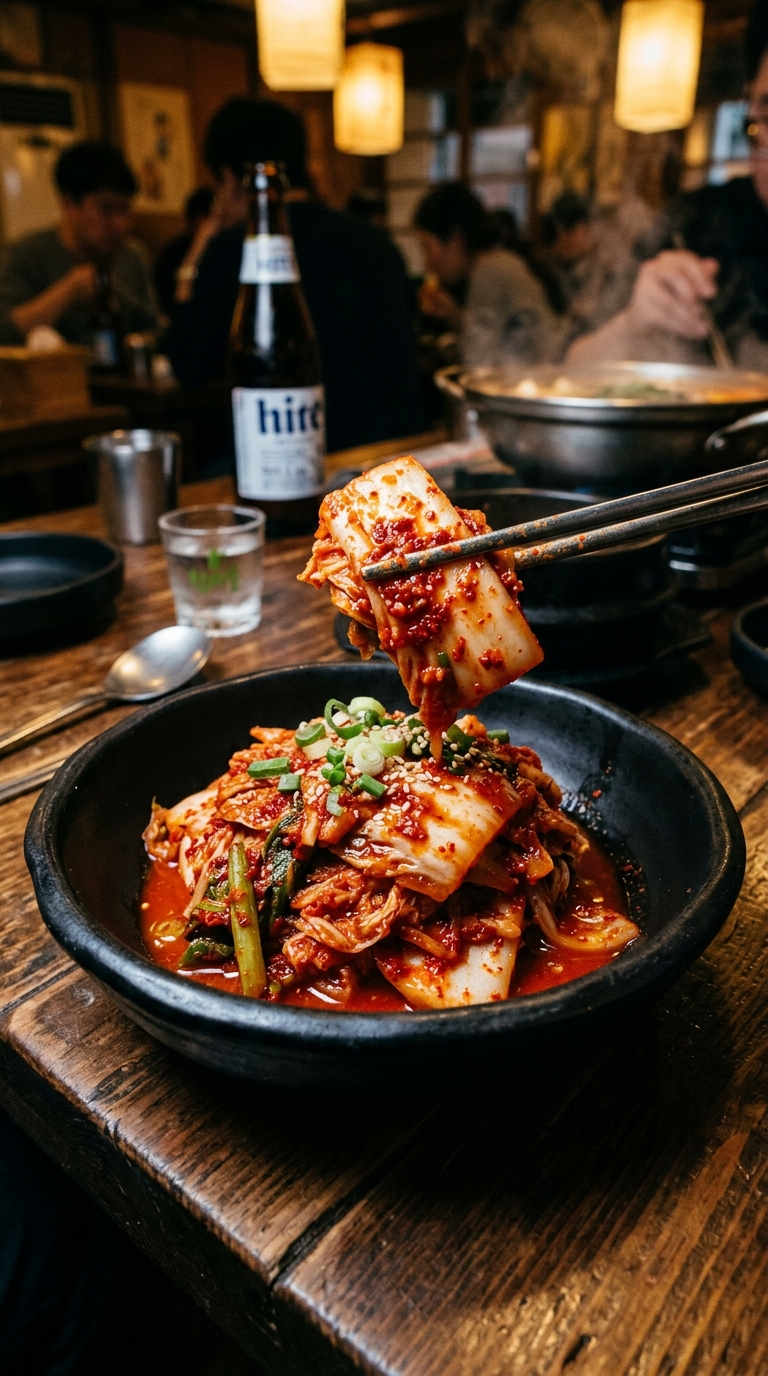
That’s the beauty of Homemade Kimchi Recipes. You control the flavor.
Tips for Perfect Kimchi Every Time
Use Gloves
Gochugaru burns sensitive skin fast.
I ignored this advice once. My hands felt haunted for hours.
Don’t Skip Fermentation
Fresh kimchi tastes good.
Fermented kimchi tastes amazing.
Patience pays off here.
Use Glass Containers
Glass jars prevent weird odors and preserve flavor better.
Plastic containers eventually smell like permanent garlic warfare.
Keep Ingredients Fresh
Fresh garlic, ginger, and cabbage create brighter flavor.
Old vegetables make sad kimchi. Nobody wants sad kimchi.
Kimchi Vegetarian Recipe Variations
People often think kimchi always contains seafood. Not true.
A good Kimchi Vegetarian Recipe tastes rich and satisfying without fish sauce.
Try adding:
- Miso paste
- Soy sauce
- Mushroom powder
- Seaweed broth
These ingredients build savory depth naturally.
Kimchi Vegan Recipes Worth Trying
Want extra variety?
Here are some tasty Kimchi Vegan Recipes ideas:
- Cucumber kimchi
- Radish kimchi
- Green onion kimchi
- Carrot kimchi
Each version offers different texture and flavor.
Fast Kimchi Recipe for Busy Days
Don’t want to wait several days?
Try a Fast Kimchi Recipe.
Simply refrigerate immediately after mixing and eat within 24 hours.
The flavor tastes fresher and less sour.
Quick kimchi works great for beginners who feel nervous about fermentation.
FYI, quick kimchi disappears ridiculously fast at dinner parties.
What To Eat With Kimchi
This question comes up constantly because kimchi works with almost everything.
Seriously, it upgrades boring meals instantly.
Best Pairings
- Steamed rice
- Ramen
- Fried eggs
- Grilled chicken
- Burgers
- Dumplings
- Stir-fried noodles
Kimchi Meal Ideas
Need inspiration?
Here are easy Kimchi Meal Ideas:
Kimchi Fried Rice
Chop kimchi and stir-fry it with rice, eggs, and sesame oil.
This might become your lazy-day comfort meal.
Kimchi Grilled Cheese
Add kimchi to grilled cheese sandwiches.
Crunchy, spicy cheese sandwiches deserve more respect.
Kimchi Noodles
Mix kimchi into spicy noodles with scallions and sesame seeds.
Dinner solved in 15 minutes.
Kimchi Pancakes
Korean kimchi pancakes taste crispy, savory, and slightly spicy.
Rainy days practically demand them.
Kimchi Recipe Ideas Dinners You’ll Actually Crave
Some recipes sound impressive but taste forgettable. Kimchi avoids that problem completely.
Kimchi Tofu Bowls
Serve crispy tofu over rice with kimchi and spicy mayo.
This meal feels healthy and indulgent simultaneously.
Kimchi Soup
Add kimchi to broth with tofu and mushrooms.
The soup tastes warming, spicy, and deeply comforting.
Kimchi Mac and Cheese
Sounds weird.
Tastes incredible.
The tangy kimchi cuts through rich cheese beautifully.
Kimchi Dishes Korean Recipes Beginners Should Try
If you love Korean food, kimchi opens endless possibilities.
Easy Starter Recipes
- Kimchi fried rice
- Kimchi stew
- Kimchi noodles
- Kimchi dumplings
- Kimchi pancakes
These dishes help beginners explore the Best Korean Food without complicated cooking techniques.
Storage Tips for Homemade Kimchi
Store kimchi in the refrigerator after fermentation.
Properly stored kimchi lasts several months.
The flavor grows stronger over time.
Older kimchi works perfectly in soups and cooked dishes.
Fresh kimchi tastes crunchier and brighter.
Both versions deserve appreciation 🙂
Common Kimchi Mistakes
Everyone messes up their first batch slightly. Relax.
Using Too Little Salt
Salt controls fermentation and texture.
Without enough salt, kimchi becomes mushy quickly.
Overfilling the Jar
Fermentation creates gas.
Overfilled jars leak dramatically.
Ask me how I know :/
Forgetting Daily Burping
Open the jar daily during fermentation.
Pressure buildup causes messy surprises.
Why Homemade Kimchi Beats Store-Bought
Store-bought kimchi works fine.
Homemade kimchi tastes fresher, crunchier, and more balanced.
You control:
- Spice level
- Saltiness
- Sweetness
- Fermentation time
Plus, making kimchi feels oddly satisfying.
You basically turn cabbage into flavor magic.
Kimchi Aesthetic: Why It Looks So Good
Let’s talk about the Kimchi Aesthetic for a second.
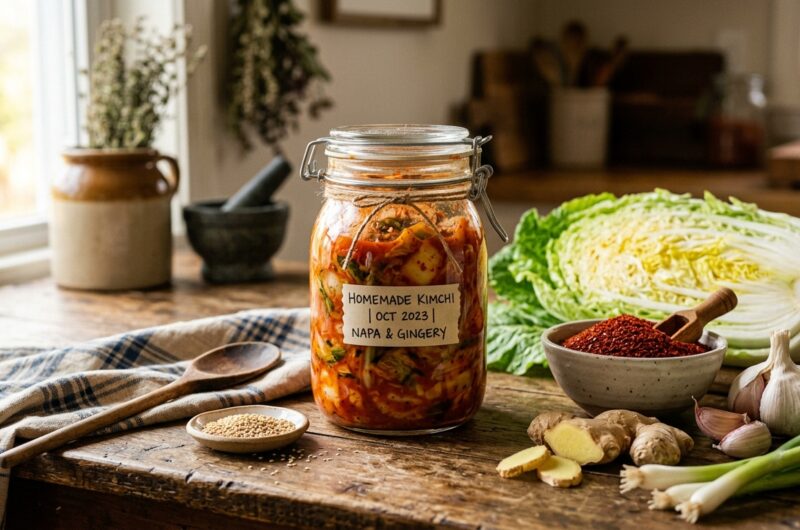
That bright red color looks gorgeous in photos and meals. Food bloggers absolutely love it because it instantly makes plates look vibrant.
Honestly, even plain rice looks fancy beside kimchi.
Spicy Korean Kimchi Recipe for Beginners
4
servings30
minutes40
minutes300
kcalThis homemade kimchi recipe creates spicy, tangy, crunchy Korean fermented cabbage packed with bold flavor. The recipe uses napa cabbage, gochugaru, garlic, ginger, and simple seasonings. Ferment the kimchi for several days to develop deep flavor. Enjoy it with rice, noodles, soups, sandwiches, or your favorite Korean-inspired meals.
Ingredients
Main Ingredients
1 large napa cabbage, about 2 pounds
1/2 cup sea salt
4 cups water
1 medium daikon radish, julienned
4 green onions, chopped
Kimchi Paste Ingredients
5 tablespoons Korean red pepper flakes (gochugaru)
1 tablespoon sugar
1 tablespoon soy sauce
1 tablespoon fish sauce
6 garlic cloves, minced
1 tablespoon grated ginger
1 small pear, grated
2 tablespoons rice flour
1/2 cup water
Directions
- Cut and salt the cabbage.
- Let cabbage rest for two hours.
- Rinse and drain thoroughly.
- Prepare spicy kimchi paste.
- Mix cabbage with vegetables and paste.
- Pack tightly into jars.
- Ferment for 2–5 days.
- Refrigerate and enjoy.
FAQs About Kimchi Recipe
1. How long does homemade kimchi last?
Homemade kimchi lasts several months in the refrigerator. The flavor becomes stronger over time.
2. Can I make kimchi without fish sauce?
Yes. Use soy sauce, miso, or coconut aminos for a vegan-friendly version.
3. Why does kimchi taste sour?
Fermentation creates sourness naturally. Longer fermentation produces tangier flavor.
4. Is kimchi very spicy?
Kimchi ranges from mild to extremely spicy depending on the amount of gochugaru used.
5. Can I freeze kimchi?
Yes, but freezing softens the texture slightly. Frozen kimchi works best in cooked dishes.
6. What makes kimchi healthy?
Kimchi contains fermented vegetables, probiotics, vitamins, and fiber.
7. Can beginners make kimchi easily?
Absolutely. This Kimchi Easy recipe keeps the process simple and approachable.
Final Thoughts on This Recipe For Kimchi
Making kimchi at home feels surprisingly rewarding. You start with cabbage and spices, then somehow create something bold, funky, and addictive.
This Recipe For Kimchi works for beginners and serious food lovers alike. Experiment with flavors, adjust spice levels, and make it your own.
And honestly? Once you taste homemade kimchi, those tiny expensive grocery jars start looking a little suspicious.