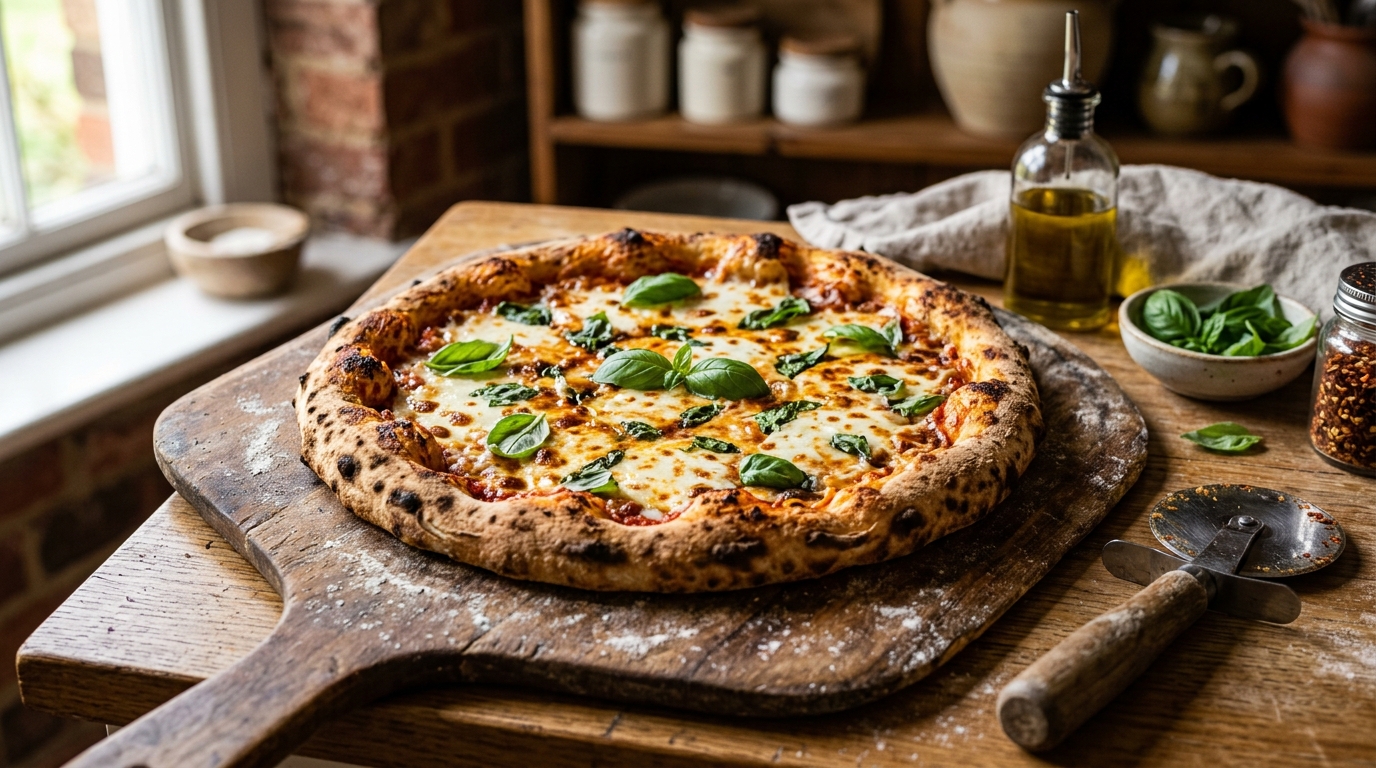
How to Make Homemade Pizza Dough from Scratch
Few kitchen victories feel as satisfying as pulling a homemade pizza from the oven. The crust turns golden, the cheese bubbles perfectly, and the entire house smells like a neighborhood pizzeria. Then someone takes a bite and asks, “You made the dough yourself?” That’s the moment you try not to look too proud.
The truth is that learning how to make homemade pizza dough from scratch is much easier than most people think. Many beginners assume pizza dough requires professional skills, special equipment, or some secret Italian family recipe. It doesn’t.
I used to buy pre-made dough because I thought homemade pizza dough sounded intimidating. After making it a few times, I realized the process mostly involves mixing ingredients and waiting patiently. The waiting part might actually be the hardest challenge.
Let’s walk through everything you need to know to make delicious homemade pizza dough from scratch.
Why Make Pizza Dough from Scratch?
Store-bought dough works fine in a pinch.
Homemade dough, however, gives you complete control over flavor, texture, and freshness.
Benefits of Homemade Pizza Dough
Making pizza dough at home allows you to:
- Control ingredients
- Save money
- Customize texture
- Avoid preservatives
- Create fresher flavor
Fresh dough produces better pizza. The difference becomes obvious after your first successful batch.
Homemade vs Store-Bought Dough
Store-bought dough offers convenience.
Homemade dough offers:
- Better flavor
- Better texture
- More flexibility
- Greater satisfaction
IMO, the extra effort pays off every time.
The Basic Ingredients You Need
Pizza dough requires surprisingly few ingredients.
Essential Ingredients
You’ll need:
- 3½ cups all-purpose flour
- 1 packet active dry yeast
- 1¼ cups warm water
- 2 tablespoons olive oil
- 1 teaspoon sugar
- 1 teaspoon salt
That’s it.
No complicated ingredients. No mysterious powders hiding in specialty stores.
Why Each Ingredient Matters
Every ingredient serves a purpose.
- Flour creates structure.
- Yeast creates rise and texture.
- Water hydrates the dough.
- Salt adds flavor.
- Sugar feeds the yeast.
- Olive oil improves texture.
Even simple recipes rely on teamwork.
Understanding Yeast
Yeast intimidates many beginners.
Fortunately, yeast isn’t nearly as scary as its reputation suggests.
What Yeast Actually Does
Yeast consumes sugar and releases gas.
That gas creates air pockets throughout the dough.
Those air pockets help create the chewy texture people love in pizza crust.
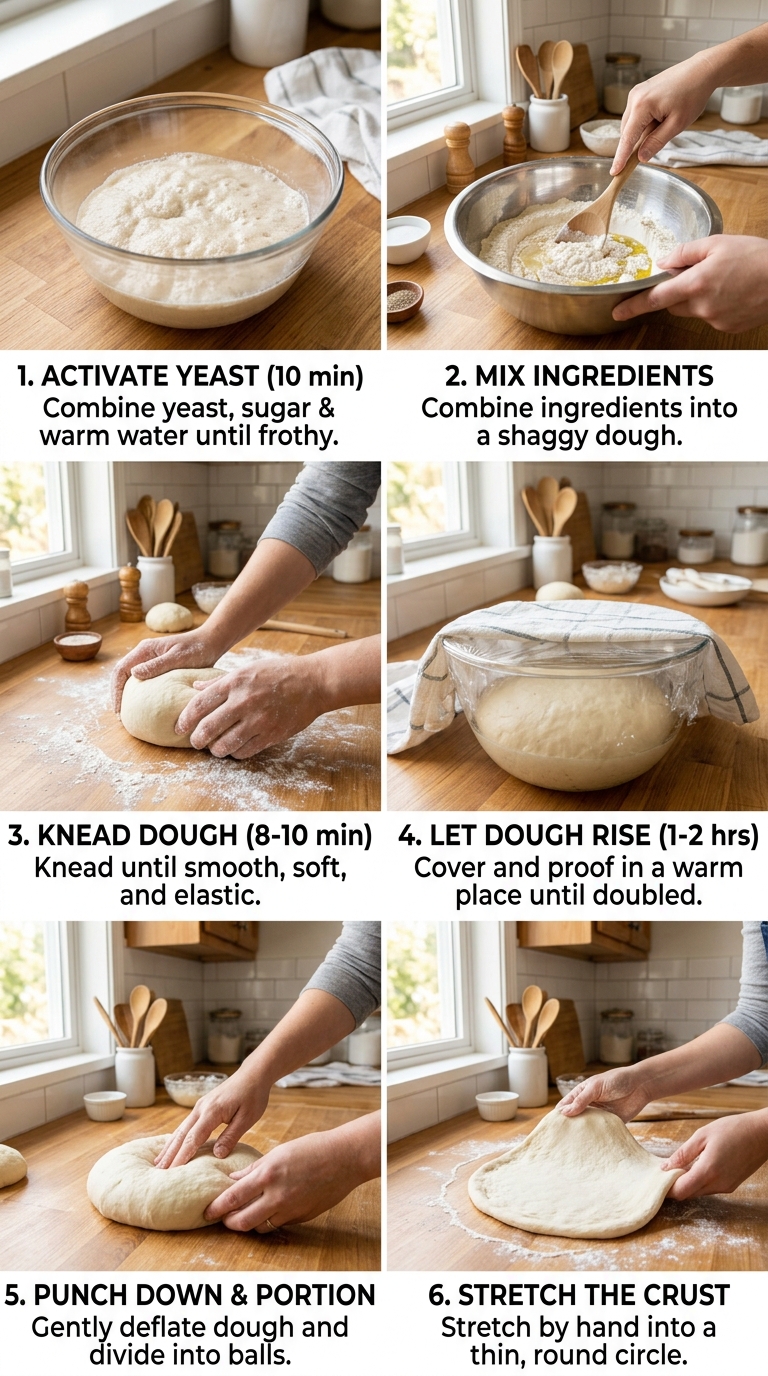
How to Activate Yeast
Combine:
- Warm water
- Sugar
- Yeast
Wait 5–10 minutes.
The mixture should become foamy.
If nothing happens, your yeast may have expired.
Unfortunately, motivational speeches rarely help expired yeast.
Mixing the Dough
Once your yeast activates, you’re ready to mix.
Step-by-Step Mixing Process
- Combine flour and salt in a large bowl.
- Add the yeast mixture.
- Add olive oil.
- Stir until a rough dough forms.
The dough will look messy initially.
That’s completely normal.
Avoid Overthinking It
Many beginners worry about perfect mixing.
Don’t.
At this stage, you simply want all ingredients combined.
The kneading process handles the rest.
How to Knead Pizza Dough Properly
Kneading develops gluten.
Gluten gives pizza dough its structure and chewiness.
Hand Kneading Method
Place the dough on a lightly floured surface.
Then:
- Push the dough away with your palms.
- Fold it back toward yourself.
- Rotate slightly.
- Repeat.
Continue for 8–10 minutes.
How to Know When It’s Ready
Properly kneaded dough feels:
- Smooth
- Elastic
- Soft
Ever wonder why some pizza crusts feel tough while others feel perfect? Proper kneading often makes the difference.
Let the Dough Rise
Now comes the easiest part.
First Rise
Place the dough into a lightly oiled bowl.
Cover it with:
- Plastic wrap
- Clean kitchen towel
Allow it to rise for 1–2 hours.
What Happens During Rising?
The yeast continues working.
The dough expands and develops flavor.
Patience pays off here.
Every great pizza starts with a little waiting.
Why Dough Rising Time Matters
Some beginners rush this step.
That usually leads to disappointing crust.
Benefits of Proper Rising
A good rise creates:
- Better flavor
- Better texture
- Improved air pockets
- Easier stretching
Longer fermentation often creates better pizza dough.
Overnight Dough Option
For even better results:
- Refrigerate the dough overnight.
- Let it return to room temperature before using.
This method develops deeper flavor.
Many pizza enthusiasts swear by it.
Shaping the Pizza Dough
Once the dough rises, it’s time for the fun part.
Divide the Dough
This recipe typically makes:
- Two medium pizzas
- One large pizza
Choose whatever fits your plans.
Stretching the Dough
Use your hands whenever possible.
Gently:
- Press from the center outward
- Rotate frequently
- Stretch gradually
Avoid Overusing the Rolling Pin
A rolling pin removes some air pockets.
Hand stretching preserves more texture.
The pizza won’t punish you for using a rolling pin, but hand-stretched dough often tastes better.
Choosing the Best Flour
Flour affects texture significantly.
All-Purpose Flour
All-purpose flour offers:
- Convenience
- Accessibility
- Consistent results
It’s an excellent starting point.
Bread Flour
Bread flour creates:
- More chewiness
- Stronger structure
- Slightly crispier crust
I personally prefer bread flour for homemade pizza.
The extra chew feels closer to restaurant-style pizza.
Common Pizza Dough Mistakes
Everyone makes mistakes while learning.
I certainly did.
Using Water That’s Too Hot
Hot water can damage yeast.
Aim for warm water, not boiling water.
Adding Too Much Flour
Sticky dough often tempts people to add flour.
Resist that urge.
A slightly sticky dough often creates a better crust.
Skipping the Rise
No shortcut replaces proper fermentation.
Allow the dough time to develop.
Your crust will thank you later.
Best Pizza Toppings for Homemade Dough
Great dough deserves great toppings.
Classic Choices
Popular options include:
- Mozzarella
- Pepperoni
- Mushrooms
- Onions
- Bell peppers
Simple combinations often work best.
Avoid Overloading
Too many toppings create problems.
Excess toppings can:
- Prevent crispness
- Increase moisture
- Weigh down the crust
Sometimes less really is more.
Baking Homemade Pizza
The oven plays a major role in pizza quality.
Use High Heat
Bake pizza at:
- 475°F–500°F (245°C–260°C)
High heat helps create a crisp crust.
Pizza Stone vs Baking Sheet
A pizza stone generally produces:
- Better browning
- Crispier crust
- More even baking
A baking sheet still works perfectly well.
Use what you have.
Baking Time
Most homemade pizzas bake in:
- 10–15 minutes
Watch the crust closely.
Golden brown usually signals success.
Can You Freeze Pizza Dough?
Absolutely.
How to Freeze Dough
After the first rise:
- Divide the dough.
- Place portions into freezer bags.
- Freeze for up to three months.
How to Thaw Frozen Dough
Move dough to the refrigerator overnight.
Then let it reach room temperature before stretching.
This method works beautifully for meal prep.
FYI, having pizza dough ready in the freezer feels surprisingly luxurious 🙂
Troubleshooting Pizza Dough Problems
Sometimes things don’t go perfectly.
That’s part of learning.
Dough Won’t Rise
Possible causes:
- Expired yeast
- Water too hot
- Cold room temperature
Dough Shrinks Back
The gluten needs more relaxation.
Allow the dough to rest for 10–15 minutes.
Then try stretching again.
Tough Crust
Common causes include:
- Too much flour
- Overbaking
- Insufficient rise time
Small adjustments usually solve the issue.
Building Confidence With Homemade Pizza
Practice matters more than perfection.
Start Simple
Focus on:
- Basic dough
- Simple toppings
- Consistent technique
Master fundamentals first.
Learn From Every Batch
Each pizza teaches something.
One batch may reveal a better hydration level.
Another may reveal better baking timing.
Every pizza improves your skills.
Final Thoughts on How to Make Homemade Pizza Dough from Scratch
Learning how to make homemade pizza dough from scratch gives you complete control over your pizza experience. With a few simple ingredients, proper kneading, adequate rising time, and high-heat baking, you can create restaurant-quality pizza right in your own kitchen.
Remember the essentials:
- Use fresh yeast
- Knead thoroughly
- Allow proper rising time
- Stretch gently
- Bake at high temperatures
Most importantly, don’t stress about perfection. Every batch helps you improve.
The next time pizza night rolls around, skip the store-bought dough and make your own. You might discover that homemade pizza dough becomes one of your favorite kitchen skills—and your family will probably request it again and again.