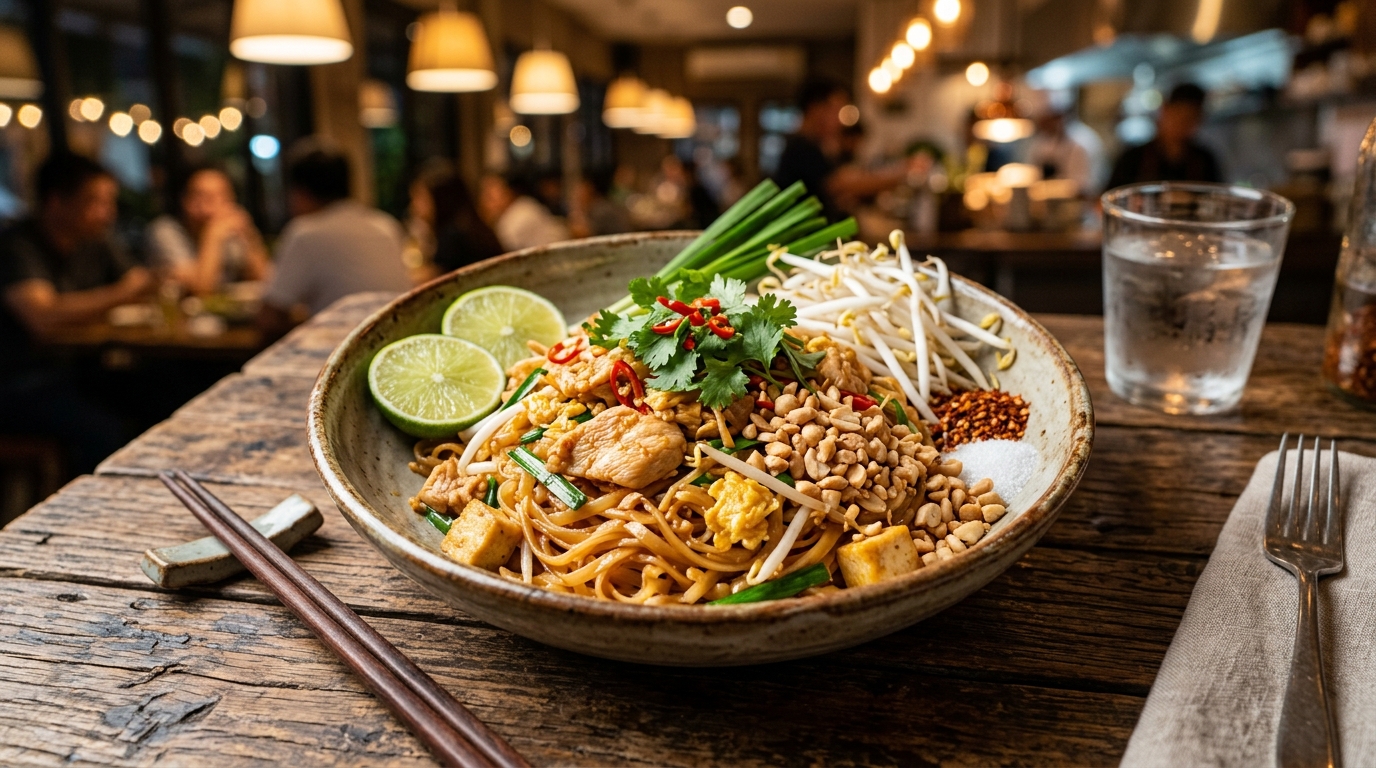
Healthy Pad Thai Recipe With Fresh Ingredients
Craving noodles that taste smoky, tangy, sweet, and slightly nutty all at once? Pad Thai Recipe fans know the struggle. One bad takeout box can ruin your trust forever. Dry noodles, sad peanuts, mystery sauce… honestly, who approved that?
I started making Homemade Pad Thai after paying way too much for noodles that tasted like ketchup. Since then, I’ve tested dozens of versions in my kitchen. Some turned out amazing. Some looked like noodle crimes. That’s part of the fun, right?
This guide gives you the Best Pad Thai Recipe with simple ingredients, easy steps, and enough detail to help you nail it on the first try. Whether you love Pad Thai Chicken, shrimp, tofu, or full veggie mode, this recipe works beautifully.
Why Everyone Loves Pad Thai
Pad Thai Noodles hit every flavor note perfectly. You get sweetness from sugar, sourness from tamarind, saltiness from fish sauce, and crunch from peanuts. Your brain basically throws a tiny celebration.
People also love this dish because it feels fancy without requiring chef-level skills. That’s why it appears in so many Thai Dinner Recipes and Easy Thai Recipes lists online.
Honestly, once you learn the sauce, you unlock half the magic of Thai Cooking.
What Makes This Pad Thai Recipe Special?
Some recipes overload the sauce. Others drown the noodles until they resemble soup. Weird choice, IMO.
This version stays balanced and fresh. The noodles stay chewy. The sauce coats everything lightly instead of attacking your plate.
Here’s why this recipe works:
- Balanced Pad Thai Sauce
- Quick cooking time
- Easy ingredient swaps
- Restaurant-style flavor
- Perfect for weeknight dinners
- Beginner-friendly instructions
You also control the spice level. Your mouth won’t file a complaint afterward.
Servings and Prep Time
- Servings: 4 people
- Prep Time: 20 minutes
- Cooking Time: 15 minutes
- Total Time: 35 minutes
That’s faster than waiting for delivery on a Friday night. Barely.
Ingredients for Homemade Pad Thai
For the Pad Thai Noodles
- 8 ounces rice noodles
- 2 tablespoons vegetable oil
- 1 pound chicken breast, thinly sliced
- 3 garlic cloves, minced
- 2 eggs
- 1 cup bean sprouts
- 4 green onions, sliced
- 1/2 cup shredded carrots
- 1/4 cup crushed peanuts
- 1 lime, cut into wedges
- Fresh cilantro for garnish
For the Pad Thai Sauce
- 3 tablespoons tamarind paste
- 3 tablespoons fish sauce
- 2 tablespoons brown sugar
- 1 tablespoon soy sauce
- 1 teaspoon chili sauce
- 1 tablespoon peanut butter
That tiny spoon of peanut butter creates amazing Peanut Pad Thai flavor. Trust me on this one.
Ingredient Tips That Actually Matter
Choose the Right Rice Noodles
Thin rice noodles work best for authentic texture. Thick noodles turn heavy and chewy in a bad way.
Soak the noodles instead of boiling them. Boiled noodles become mushy faster than cereal left in milk too long.
Tamarind Paste Matters
Tamarind gives authentic Pad Thai Sauce its signature tangy flavor. Don’t skip it unless absolutely necessary.
If you cannot find tamarind, mix lime juice with brown sugar. The flavor changes slightly, but dinner still survives.
Fish Sauce Smells Weird
Yes, fish sauce smells intense. Every first-time cook reacts dramatically. Then they taste the final dish and suddenly become silent.
Fish sauce delivers authentic depth in many Thai Food Recipes and Thai Recipes Authentic dishes.
How to Make the Best Pad Thai Recipe

Step 1: Soak the Noodles
Place rice noodles in warm water for about 30 minutes.
The noodles should feel flexible but slightly firm. They finish cooking later in the pan.
Drain the noodles and set them aside.
Step 2: Mix the Sauce
Whisk tamarind paste, fish sauce, brown sugar, soy sauce, chili sauce, and peanut butter in a bowl.
Taste the sauce before cooking. Want more sweetness? Add sugar. Need more tang? Add tamarind.
This sauce creates the soul of your Healthy Pad Thai.
Step 3: Cook the Chicken
Heat vegetable oil in a large wok or skillet over medium-high heat.
Add sliced chicken and cook for 5 to 6 minutes. Stir constantly so the meat cooks evenly.
The edges should turn slightly golden. That caramelization adds huge flavor.
Step 4: Add Garlic and Eggs
Push the chicken to one side of the pan.
Add garlic to the empty space and cook for 30 seconds. Garlic burns fast, so don’t wander off checking memes.
Crack the eggs into the pan. Scramble them gently until fully cooked.
Step 5: Add the Noodles
Add soaked noodles directly into the pan.
Pour the Pad Thai Sauce over the noodles immediately. Toss everything together with tongs.
The noodles absorb the sauce quickly. Keep stirring constantly.
Step 6: Add Vegetables
Mix in bean sprouts, carrots, and green onions.
Cook for another 2 minutes. The vegetables should stay crisp and fresh.
Nobody wants limp bean sprouts. That texture feels emotionally disappointing somehow.
Step 7: Finish and Garnish
Turn off the heat.
Top the noodles with crushed peanuts, cilantro, and lime wedges.
Squeeze fresh lime juice over everything before serving. That bright acidity changes the entire dish.
Why Wok Cooking Changes Everything
A hot wok cooks food quickly while keeping ingredients crisp.
High heat creates slight smoky flavor called “wok hei.” That flavor separates good Thai Recipes Noodles from unforgettable ones.
Can you make this recipe in a normal skillet? Absolutely. A wok just adds extra personality.
Protein Variations You Should Try
Pad Thai Chicken
Chicken stays juicy and absorbs sauce beautifully.
I use chicken breast because it cooks quickly. Chicken thighs also work and add richer flavor.
Shrimp Pad Thai
Shrimp cooks in about 3 minutes and tastes amazing with tamarind sauce.
Just avoid overcooking it. Rubbery shrimp ruins dinner vibes immediately.
Tofu Pad Thai
Firm tofu works perfectly for vegetarian versions.
Press the tofu first to remove extra moisture. Crispy tofu adds fantastic texture.
How to Make Healthy Pad Thai
Traditional Pad Thai already includes fresh vegetables and lean protein. Small changes make it even lighter.
Try these ideas:
- Use less sugar
- Add extra vegetables
- Choose lean chicken
- Reduce oil slightly
- Use natural peanut butter
- Add more bean sprouts
That’s why many people love Healthy Pad Thai as a balanced dinner option.
Common Mistakes That Ruin Pad Thai
Overcooking the Noodles
Soft noodles turn sticky fast.
Always soak them until barely tender. The pan finishes the cooking process.
Using Too Much Sauce
More sauce does not mean more flavor.
Too much liquid creates soggy noodles. Nobody dreams about soggy noodles.
Cooking Everything Too Slowly
Pad Thai cooks quickly.
Prep all ingredients before heating the pan. Professional chefs call this “mise en place.” I call it “panic prevention.”
What to Serve with Pad Thai
Pad Thai already feels complete, but extra sides make dinner more exciting.
Here are my favorite pairings:
- Thai cucumber salad
- Spring rolls
- Coconut soup
- Mango sticky rice
- Thai iced tea
These sides fit beautifully with other Thai Dishes and Thai Dinner Recipes.
Why Homemade Pad Thai Tastes Better
Restaurants often add excessive sugar and oil.
Homemade versions taste fresher and cleaner. You also control every ingredient.
Plus, cooking your own Pad Thai Recipe feels weirdly satisfying. Have you ever watched noodles absorb sauce perfectly? Tiny kitchen victory right there.
Storage and Reheating Tips
Store leftovers in an airtight container for up to 3 days.
Reheat noodles in a skillet with a splash of water. Microwaves work too, but skillets preserve texture better.
Fresh lime juice wakes up leftover noodles beautifully. FYI, cold Pad Thai straight from the fridge also tastes surprisingly good 🙂
Pad Thai and Thai Cooking Culture
Pad Thai became popular in Thailand during the 1930s.
Today, it ranks among the world’s most famous Thai Food Recipes. Street vendors across Thailand still cook it fresh in blazing hot woks every day.
That balance of sweet, salty, sour, and spicy flavors defines excellent Thai Cooking.
Easy Ingredient Swaps
Missing an ingredient? Don’t panic.
Try these simple substitutions:
| Original Ingredient | Substitute |
|---|---|
| Tamarind paste | Lime juice + brown sugar |
| Fish sauce | Soy sauce |
| Chicken | Shrimp or tofu |
| Peanuts | Cashews |
| Bean sprouts | Thin cabbage |
Authentic recipes matter, but flexibility keeps cooking fun.
Healthy Pad Thai Recipe With Fresh Ingredients
Course: Soup u0026amp; Drinks4
servings30
minutes40
minutes300
kcalThis Pad Thai recipe combines chewy rice noodles, juicy chicken, crunchy peanuts, and tangy homemade sauce for a quick Thai-inspired dinner. The recipe stays simple, flavorful, and beginner-friendly. Fresh vegetables and balanced seasoning create authentic taste while keeping the dish lighter, healthier, and better than greasy restaurant takeout.
Ingredients
Rice noodles
Chicken breast
Garlic
Eggs
Bean sprouts
Green onions
Carrots
Crushed peanuts
Lime
Cilantro
Tamarind paste
Fish sauce
Brown sugar
Soy sauce
Chili sauce
Peanut butter
Vegetable oil
Directions
- Making Process Summary
- Soak rice noodles in warm water.
- Mix Pad Thai sauce ingredients.
- Cook chicken in hot oil.
- Add garlic and scramble eggs.
- Toss noodles with sauce.
- Add vegetables and cook briefly.
- Garnish with peanuts, cilantro, and lime.
- Serve hot immediately.
FAQs About Pad Thai Recipe
1. What noodles work best for Pad Thai?
Thin rice noodles work best. They absorb sauce beautifully without becoming heavy.
2. Can I make Pad Thai vegetarian?
Yes. Replace chicken with tofu and use soy sauce instead of fish sauce.
3. Why does restaurant Pad Thai taste smoky?
Restaurants use extremely hot woks that create smoky flavor called wok hei.
4. How spicy should Pad Thai be?
Traditional Pad Thai stays mildly spicy. You can always add more chili sauce later.
5. Can I prepare Pad Thai sauce ahead of time?
Absolutely. Store the sauce in the fridge for up to one week.
6. Is Pad Thai healthy?
Yes, especially when you use lean protein and plenty of vegetables.
7. Can I freeze Pad Thai?
You can, but fresh noodles taste much better. Frozen noodles lose texture quickly.
Final Thoughts on This Pad Thai Recipe
This Pad Thai Recipe delivers bold flavor, chewy noodles, crunchy peanuts, and fresh vegetables in every bite. It feels comforting, exciting, and ridiculously satisfying at the same time.
The best part? You don’t need advanced cooking skills. You just need good ingredients, high heat, and confidence.
Try this recipe once, and takeout might start feeling a little suspicious afterward. Your kitchen will smell incredible, your noodles will shine with sauce, and dinner will finally stop disappointing you :/