
Homemade Croissants With Perfect Flaky Layers
Nothing beats the smell of fresh croissants baking in your kitchen. Seriously, it feels like a tiny Paris bakery magically appeared beside your coffee mug. I still remember my first attempt at a Homemade Croissants Recipe. The croissants looked like sleepy bread rolls, but wow, they tasted amazing.
If you want flaky layers, buttery flavor, and bakery-style results, this guide will help you nail the Best Croissant Recipe without losing your sanity. Yes, croissants take time. No, you do not need a fancy chef hat or dramatic French music in the background.
Why This Croissant Recipe Works
I tested several methods before settling on this version. Some recipes made croissants too chewy. Others demanded the patience of a monk. This recipe balances flavor, texture, and practicality.
Here’s why this Perfect Croissant Recipe works so well:
- Uses simple ingredients
- Creates crisp outer layers
- Produces soft buttery centers
- Works for beginners and experienced bakers
- Delivers bakery-style texture without complicated techniques
Have you ever bitten into a croissant that shattered everywhere? That flaky mess actually means success. Annoying? Yes. Delicious? Also yes.
Recipe Overview
Servings
This recipe makes 12 croissants.
Prep Time
- Dough prep: 45 minutes
- Chilling time: 8 hours
- Shaping time: 30 minutes
- Baking time: 20 minutes
Total Time
About 10 hours, including resting time.
FYI, most of that time involves waiting while the dough chills. You do not need to stand beside the fridge dramatically staring at butter.
Ingredients for Homemade Croissants Recipe
Here’s everything you need for this Classic Croissant Recipe.
Dough Ingredients
- 4 cups all-purpose flour
- 1/4 cup granulated sugar
- 1 tablespoon instant yeast
- 1 1/2 teaspoons salt
- 1 1/4 cups warm milk
- 2 tablespoons unsalted butter, softened
Butter Layer
- 1 1/4 cups unsalted butter cold
Egg Wash
- 1 egg
- 1 tablespoon milk
Optional Fillings
Want creative Croissant Filling Ideas? Try these:
- Chocolate chips
- Almond paste
- Strawberry jam
- Nutella
- Ham and cheese
- Cinnamon sugar
Honestly, chocolate-filled croissants disappear faster in my house than clean socks.
How To Make Croissants Recipe Step By Step
Step 1: Prepare the Dough
Start by mixing flour, sugar, yeast, and salt in a large bowl. Stir everything evenly.
Pour warm milk into the bowl. Add softened butter. Mix until the dough forms.
Knead the dough for about 8 minutes. The dough should feel soft and slightly elastic.
Do not overthink the kneading process. Your dough does not expect perfection. It just wants attention.
Important Dough Tip
If the dough feels sticky, sprinkle a little flour. If it feels dry, add one teaspoon of milk.
Small adjustments matter. Croissant dough acts dramatic sometimes :/
Step 2: Let the Dough Rise
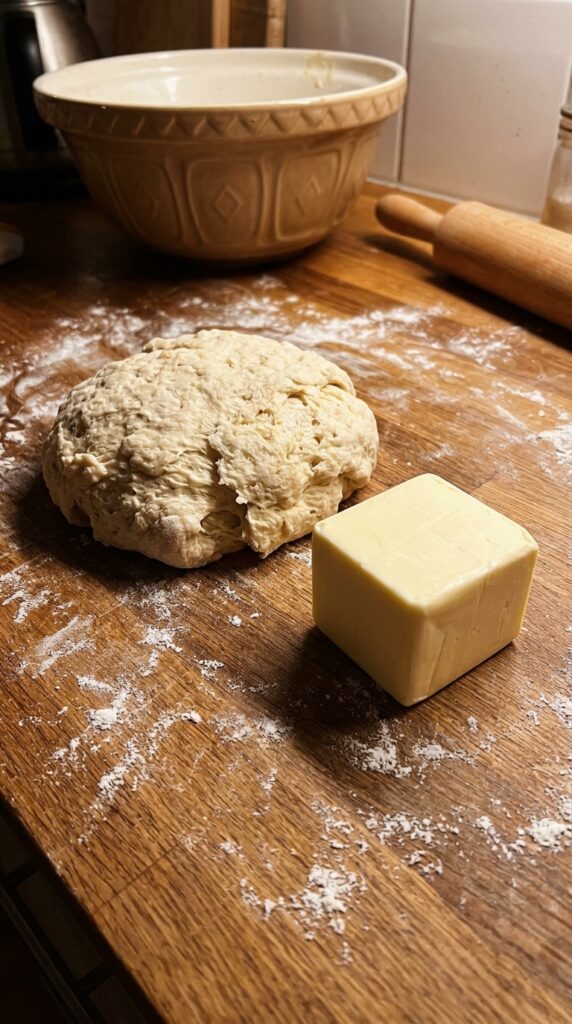
Place the dough into a greased bowl. Cover it with plastic wrap or a kitchen towel.
Let it rise for about 1 hour. The dough should double in size.
Warm kitchens help a lot here. Cold kitchens slow everything down like an old laptop opening twenty browser tabs.
Step 3: Prepare the Butter Block
Place cold butter between two sheets of parchment paper.
Use a rolling pin to flatten the butter into a rectangle. Aim for roughly 7×10 inches.
Keep the butter cold but flexible. Hard butter breaks. Soft butter leaks. Croissants truly enjoy testing your emotional stability.
Step 4: Roll the Dough
Roll the dough into a large rectangle.
Place the butter block in the center. Fold the dough over the butter like an envelope.
Seal the edges carefully so butter stays inside.
Why Folding Matters
Folding creates the famous flaky layers in a French Croissant Recipe.
Every fold builds buttery sheets inside the dough. Those layers puff beautifully while baking.
Have you ever wondered why bakery croissants look so airy? Laminated dough creates that magic.
Step 5: First Fold
Roll the dough gently into a long rectangle.
Fold one side toward the center. Fold the other side over it like a letter.
Wrap the dough and refrigerate for 30 minutes.
Cold dough stays manageable. Warm dough turns into buttery chaos.
Step 6: Repeat the Folding Process
Repeat the rolling and folding process three more times.
Chill the dough between each fold.
This step requires patience, but it creates the flaky texture everyone loves in the Best Crossiant Recipe.
IMO, this part feels oddly relaxing once you get into the rhythm.
Step 7: Shape the Croissants
Roll the chilled dough into a large rectangle about 1/4-inch thick.
Cut triangles using a sharp knife or pizza cutter.
Roll each triangle tightly from the wide end toward the tip.
Curve the ends slightly to create the classic crescent shape.
Shaping Tip
Do not roll too tightly.
Croissants need room to expand while baking. Squished croissants feel sad. Nobody wants sad croissants.
Step 8: Final Rise
Place croissants on a baking tray lined with parchment paper.
Cover loosely and let them rise for 1 to 2 hours.
They should look puffy and soft before baking.
Egg Wash Time
Whisk egg and milk together.
Brush the mixture gently over each croissant.
This step creates the beautiful golden shine. Skip it, and your croissants may look oddly pale and confused.
Step 9: Bake the Croissants
Preheat your oven to 400°F.
Bake croissants for 18 to 22 minutes until golden brown.
Your kitchen will smell incredible at this point. Neighbors may suddenly become unusually friendly.
Let croissants cool slightly before serving.
Tips for the Best Croissant Recipe
Keep Everything Cold
Cold butter creates flaky layers.
Warm butter melts into the dough and ruins the texture.
Professional bakers obsess over temperature for good reason.
Use Good Butter
High-quality butter improves flavor dramatically.
European-style butter works especially well because it contains more fat.
Cheap butter still works, but premium butter creates richer croissants.
Avoid Extra Flour
Too much flour toughens the dough.
Use just enough flour to prevent sticking.
Chill Between Folds
Never skip chilling time.
Cold dough handles easily and keeps layers distinct.
Patience rewards you with bakery-style croissants.
Croissant Filling Ideas You Should Try
Plain croissants taste amazing, but fillings make things extra fun.
Sweet Fillings
- Chocolate ganache
- Raspberry jam
- Lemon curd
- Cinnamon butter
- Vanilla pastry cream
Savory Fillings
- Turkey and cheddar
- Spinach and feta
- Chicken and pesto
- Bacon and egg
These options also work perfectly for Croissant Sandwich Ideas.
Croissant Recipe Breakfast Ideas
Croissants shine at breakfast. Honestly, they make ordinary mornings feel fancy.
Here are some tasty Croissant Recipe Breakfast ideas:
Breakfast Sandwiches
Fill croissants with:
- Scrambled eggs
- Sausage
- Cheese
- Avocado
These make excellent Crossiant Breakfast Recipes for busy mornings.
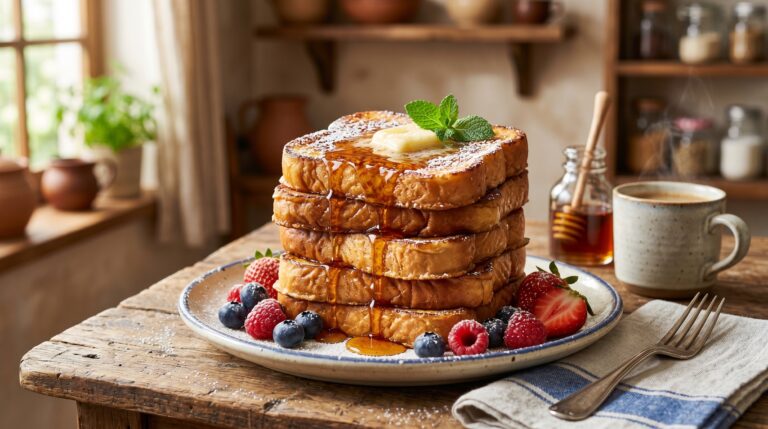
French Toast Croissants
Slice leftover croissants and dip them into French toast batter.
Cook until golden.
This trick transforms day-old croissants into an unreal breakfast.
Croissant Dessert Ideas
Croissants also create incredible desserts.
Croissant Bread Pudding
Use stale croissants instead of regular bread.
The buttery layers soak up custard beautifully.
Croissant Cake
A layered Croissant Cake looks impressive and tastes even better.
Stack croissants with whipped cream, berries, and chocolate drizzle.
People will assume you secretly trained at a Paris bakery.
Easy Croissants Recipe vs Traditional Method
Many recipes claim to offer a Croissant Recipe Easy version.
Some shortcuts work. Others create glorified dinner rolls pretending to be croissants.
Traditional Croissants
Pros:
- Superior flaky texture
- Rich buttery flavor
- Authentic bakery quality
Cons:
- Longer preparation time
- More folding steps
Easy Croissants Recipe
Pros:
- Faster process
- Beginner-friendly
Cons:
- Less flaky texture
- Softer layers
I prefer traditional croissants because the flavor feels unbeatable.
Still, quick methods help when cravings hit hard at midnight.
Different Types Of French Bread
Croissants belong to a larger world of French baking.
Here are a few famous breads and pastries:
- Baguette
- Brioche
- Pain au chocolat
- Fougasse
- Palmier
- Éclair
These belong to the broader category of Various Types Of Bread And Pastries.
French baking focuses heavily on texture, butter, and technique. Also butter. Mostly butter.
Common Croissant Mistakes
Butter Leaks Out
This usually happens because butter became too warm.
Keep the dough chilled between folds.
Dense Texture
Dense croissants often result from under-proofing.
Allow enough rising time before baking.
Uneven Layers
Rough rolling can destroy layers.
Use gentle pressure while shaping the dough.
Burned Bottoms
Use parchment paper and monitor baking closely.
Every oven behaves differently.
My old oven once burned cookies while leaving the center frozen. Truly talented behavior.
Storage Tips
Fresh croissants taste best the same day.
Still, you can store them properly.
Room Temperature
Keep croissants in an airtight container for 2 days.
Freezing
Freeze baked croissants for up to 2 months.
Reheat in the oven for best texture.
Avoid microwaving if possible. Microwaves turn flaky pastries into chewy disappointment.

Homemade Croissants With Perfect Flaky Layers
4
servings30
minutes40
minutes300
kcalThis buttery croissant recipe creates flaky bakery-style pastries with rich layers and crisp texture. The dough uses simple ingredients, careful folding, and chilling for authentic results. Perfect for breakfast sandwiches, desserts, or classic French baking. Homemade croissants require patience, but every buttery bite makes the effort completely worthwhile.
Ingredients
Dough Ingredients
4 cups all-purpose flour
1/4 cup granulated sugar
1 tablespoon instant yeast
1 1/2 teaspoons salt
1 1/4 cups warm milk
2 tablespoons unsalted butter, softened
Butter Layer
1 1/4 cups unsalted butter cold
Egg Wash
1 egg
1 tablespoon milk
Optional Fillings
Want creative Croissant Filling Ideas? Try these:
Chocolate chips
Almond paste
Strawberry jam
Nutella
Ham and cheese
Cinnamon sugar
Directions
- Prepare dough
- Let dough rise
- Make butter block
- Fold butter into dough
- Roll and fold repeatedly
- Chill between folds
- Shape croissants
- Proof until puffy
- Apply egg wash
- Bake until golden
FAQs About Croissant Recipe
1. Why do croissants need multiple folds?
Folds create thin butter layers inside the dough. Those layers puff during baking and create flakiness.
2. Can I freeze croissant dough?
Yes. Freeze shaped croissants before the final rise. Thaw overnight before baking.
3. What butter works best for croissants?
European-style butter works best because it contains more fat and less water.
4. Can beginners make croissants successfully?
Absolutely. Beginners just need patience, careful folding, and proper chilling time.
5. Why did my butter leak during baking?
Warm butter usually causes leaks. Keep the dough cold during every step.
6. How do bakeries create super flaky croissants?
Professional bakers use precise folding techniques and maintain strict temperature control.
7. Are croissants bread or pastry?
Croissants count as laminated pastry because they contain layered butter dough.
Final Thoughts
Making croissants takes effort, but the reward feels completely worth it.
You create buttery layers, rich flavor, and bakery-quality texture from simple ingredients. That feels pretty satisfying, right?
This The Best Croissant Recipe delivers crisp layers, soft centers, and endless possibilities for breakfast or dessert. Try it once, and store-bought croissants may suddenly taste a little boring.
And honestly, nothing beats pulling golden homemade croissants from the oven while pretending you own a tiny French bakery.