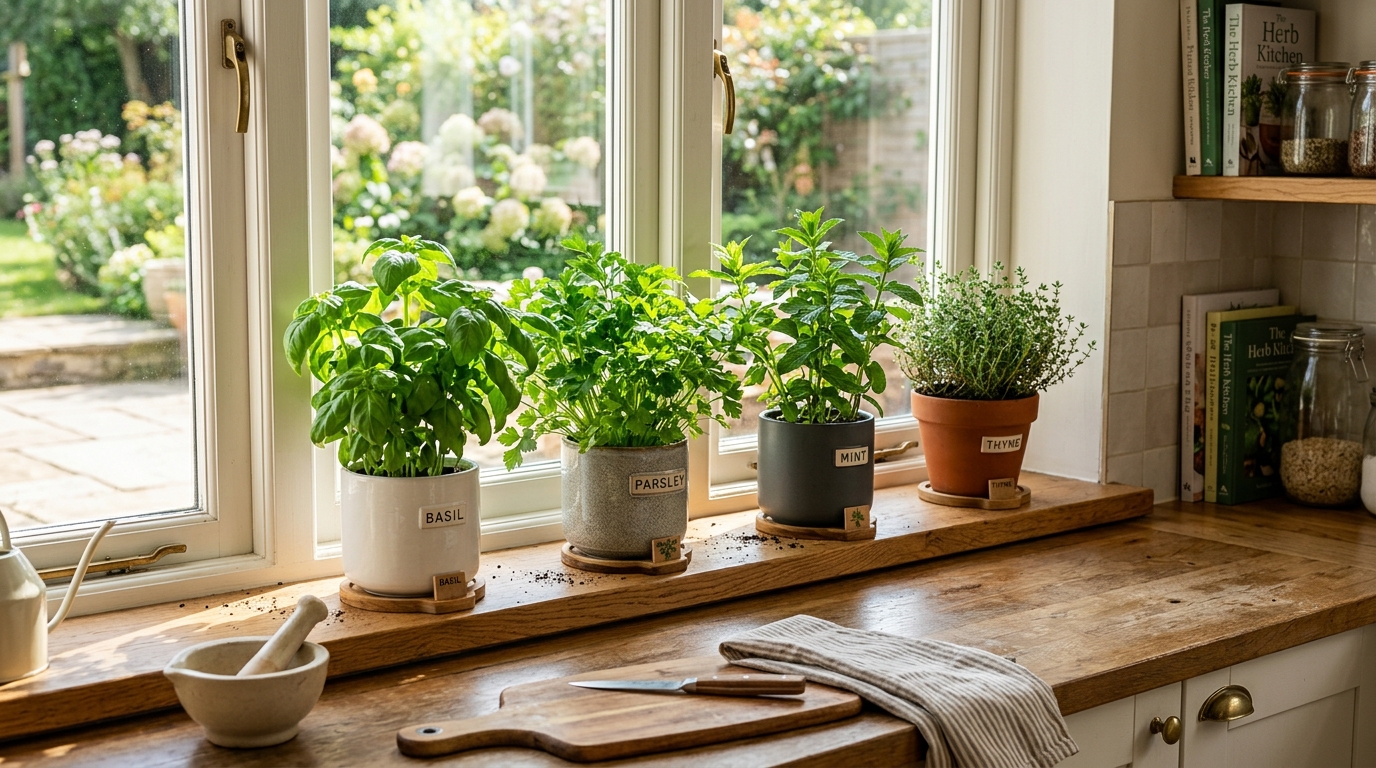
How to Start a Kitchen Herb Garden Indoors
Fresh herbs can turn a basic meal into something special. The best part? You don’t need a backyard, a greenhouse, or some magical gardening talent passed down through generations. You just need a sunny spot and a little patience.
I started my first indoor herb garden with a pot of basil sitting on a kitchen windowsill. I expected gourmet success within days. Instead, I nearly drowned the poor plant with enthusiasm. Thankfully, herbs forgive a lot of beginner mistakes.
If you’ve ever wanted fresh basil for pasta, mint for tea, or parsley for soups without running to the grocery store, you’re in the right place. Let’s talk about how to start a kitchen herb garden indoors and keep it thriving.
Why Start an Indoor Herb Garden?
An indoor herb garden offers more than convenience. It saves money, adds greenery to your home, and gives you fresh flavors whenever you need them.
Think about it. How many times have you bought a bunch of cilantro only to use three leaves before the rest turned into a science experiment in your fridge?
Indoor herb gardening helps you:
- Save money on fresh herbs
- Enjoy fresher flavors in your cooking
- Reduce food waste
- Add natural beauty to your kitchen
- Garden year-round regardless of weather
Plus, harvesting herbs from your own plants feels surprisingly satisfying. It’s like getting a tiny standing ovation from nature every time you cook.
Choose the Right Herbs for Indoor Growing
Not all herbs perform equally well indoors. Some adapt beautifully, while others act like demanding celebrities who require perfect conditions.
Best Herbs for Beginners
If you’re new to indoor gardening, start with these reliable options:
- Basil
- Parsley
- Chives
- Mint
- Oregano
- Thyme
- Cilantro
These herbs grow relatively quickly and tolerate common beginner mistakes.
My Favorite Starter Herb
Personally, I always recommend basil. It grows fast, smells amazing, and makes even simple dishes taste better. Ever brushed against a basil plant and instantly felt hungry? That’s normal.
Pick the Perfect Location
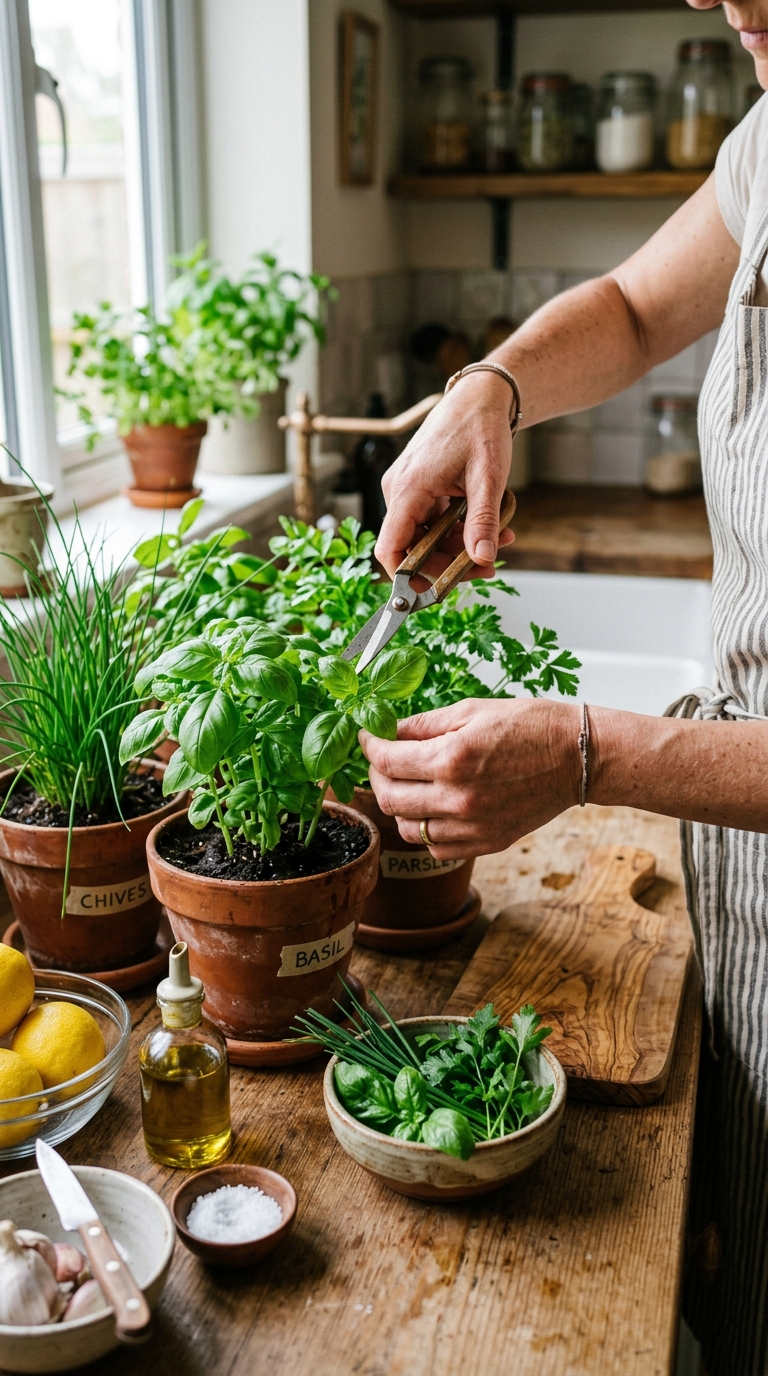
Location makes a huge difference in indoor herb gardening success.
Most culinary herbs love sunlight. They need plenty of it to produce healthy leaves and strong flavors.
Look for Natural Light
Place your herbs near:
- South-facing windows
- Southwest-facing windows
- Bright kitchen windowsills
Most herbs need 6 to 8 hours of sunlight daily.
If your kitchen resembles a cozy cave more than a sunlit paradise, don’t worry.
Use Grow Lights When Necessary
Grow lights can solve lighting problems quickly.
LED grow lights offer several benefits:
- Energy efficiency
- Low heat output
- Long lifespan
- Consistent plant growth
IMO, a good grow light removes much of the guesswork from indoor herb gardening.
Select the Right Containers
Your herbs need a comfortable home. Fancy pots look nice, but functionality matters more.
Prioritize Drainage
Always choose containers with drainage holes.
Without drainage, excess water collects around roots. Roots hate sitting in water. They react by rotting, which tends to ruin everyone’s day.
Good container options include:
- Clay pots
- Ceramic pots with drainage
- Plastic nursery pots
- Self-watering containers
Container Size Matters
Choose pots that match your herb’s growth habits.
Recommended pot sizes:
| Herb | Pot Size |
|---|---|
| Basil | 6-8 inches |
| Mint | 8-10 inches |
| Parsley | 6-8 inches |
| Thyme | 6 inches |
| Oregano | 6-8 inches |
Giving herbs enough room encourages healthier root development and stronger growth.
Use High-Quality Potting Soil
Regular garden soil doesn’t belong in indoor containers.
Garden soil compacts easily and often introduces pests. Nobody invites fungus gnats into their kitchen on purpose.
What to Look For
Choose a well-draining potting mix designed for container gardening.
Look for ingredients such as:
- Peat moss
- Coconut coir
- Perlite
- Vermiculite
These materials improve drainage and aeration.
Avoid Heavy Soil
Heavy soil retains too much moisture and limits oxygen around roots.
Healthy roots create healthy herbs. Everything starts below the surface.
Plant Your Herbs Correctly
Now comes the fun part.
You can start herbs from seeds, seedlings, or starter plants.
Seeds vs. Starter Plants
Both options work well.
Seeds offer:
- Lower cost
- More variety
- Satisfaction from growing from scratch
Starter plants offer:
- Faster harvests
- Easier setup
- Less waiting
For beginners, I usually suggest starter plants. Waiting weeks for seeds to sprout tests patience levels that many of us simply don’t possess 🙂
Proper Planting Steps
Follow these simple steps:
- Fill containers with potting mix.
- Leave about one inch of space at the top.
- Plant seeds or seedlings according to instructions.
- Water gently.
- Place containers in bright light.
That’s it. No secret handshake required.
Master the Art of Watering
Watering causes more indoor herb casualties than almost anything else.
Most beginners don’t neglect their herbs. They love them too much.
Check Before Watering
Stick your finger into the soil.
If the top inch feels dry, water the plant.
If it still feels moist, wait another day or two.
Signs of Overwatering
Watch for:
- Yellow leaves
- Wilting despite wet soil
- Moldy soil surfaces
- Root rot smells
Signs of Underwatering
Look for:
- Dry soil
- Crispy leaf edges
- Drooping stems
Consistent watering beats frequent flooding every time.
Feed Your Herbs for Better Growth
Indoor herbs benefit from occasional feeding.
Container plants use available nutrients over time, so replenishing them helps maintain healthy growth.
Choose a Balanced Fertilizer
Use a diluted liquid fertilizer every few weeks during active growth.
Good choices include:
- Organic liquid fertilizers
- Fish emulsion
- Seaweed fertilizer
- Balanced houseplant fertilizers
Avoid Overfeeding
Too much fertilizer encourages excessive growth and weaker flavors.
You want herbs that taste amazing, not herbs that simply break speed records.
Prune and Harvest Regularly
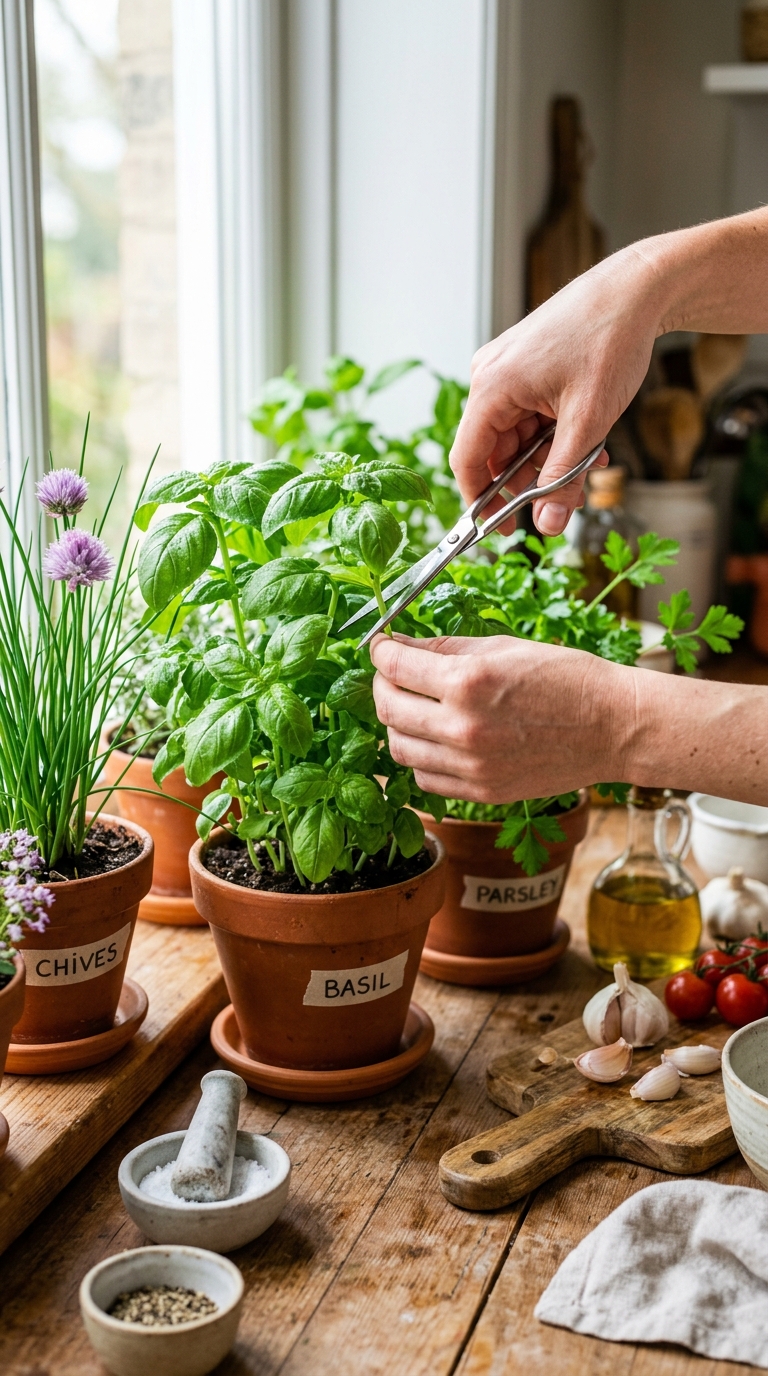
Regular harvesting keeps herbs productive.
Many people hesitate to trim their plants. I did too at first. Then I learned something important.
Cutting herbs often encourages more growth.
Harvest the Right Way
Use clean scissors and:
- Remove leaves from the top
- Harvest regularly
- Avoid removing more than one-third of the plant
Benefits of Pruning
Frequent pruning helps:
- Increase leaf production
- Prevent legginess
- Improve airflow
- Maintain attractive shapes
Ever noticed how neglected herbs become tall and awkward? They start looking like teenagers going through a growth spurt.
Prevent Common Indoor Herb Problems
Even healthy indoor gardens encounter occasional challenges.
The good news? Most issues have simple solutions.
Common Pests
Watch for:
- Aphids
- Spider mites
- Fungus gnats
- Whiteflies
Inspect leaves weekly.
Early detection makes pest control much easier.
Simple Pest Solutions
Try these methods:
- Neem oil sprays
- Insecticidal soap
- Manual removal
- Improved airflow
Most indoor herb gardeners face pests eventually. Consider it a rite of passage rather than a personal failure.
Yellow Leaves
Yellowing often indicates:
- Overwatering
- Poor drainage
- Nutrient deficiencies
- Insufficient light
Address the root cause instead of removing only the affected leaves.
Best Herbs for Different Kitchen Uses
Not every herb serves the same purpose.
For Italian Cooking
Grow:
- Basil
- Oregano
- Parsley
- Thyme
For Teas and Drinks
Grow:
- Mint
- Lemon balm
- Chamomile
For Everyday Cooking
Grow:
- Chives
- Parsley
- Cilantro
- Basil
FYI, mint grows aggressively. Give it its own pot unless you enjoy watching it attempt world domination.
Seasonal Care Tips
Indoor herbs require slight adjustments throughout the year.
Winter Care
During winter:
- Water less frequently
- Monitor humidity levels
- Supplement with grow lights if necessary
Summer Care
During summer:
- Check soil more often
- Increase airflow
- Watch for heat stress near windows
Small seasonal adjustments keep your herbs productive all year long.
Mistakes New Indoor Gardeners Should Avoid
Everyone makes mistakes. The trick involves learning from them quickly.
Common Beginner Errors
Avoid these pitfalls:
- Overwatering plants
- Choosing containers without drainage
- Ignoring sunlight requirements
- Overcrowding herbs
- Forgetting regular harvesting
I made every single one of these mistakes during my first indoor garden. Fortunately, herbs often give second chances.
Final Thoughts
Starting a kitchen herb garden indoors doesn’t require expert gardening skills. You need good light, proper containers, quality soil, consistent watering, and regular harvesting.
Start small. Pick two or three easy herbs. Learn what works in your space. Before long, you’ll snip fresh basil for pasta or mint for tea without leaving your kitchen.
And honestly, few things feel better than seasoning dinner with herbs you grew yourself. Well, except maybe keeping that basil alive on the first try. That’s a special kind of victory.