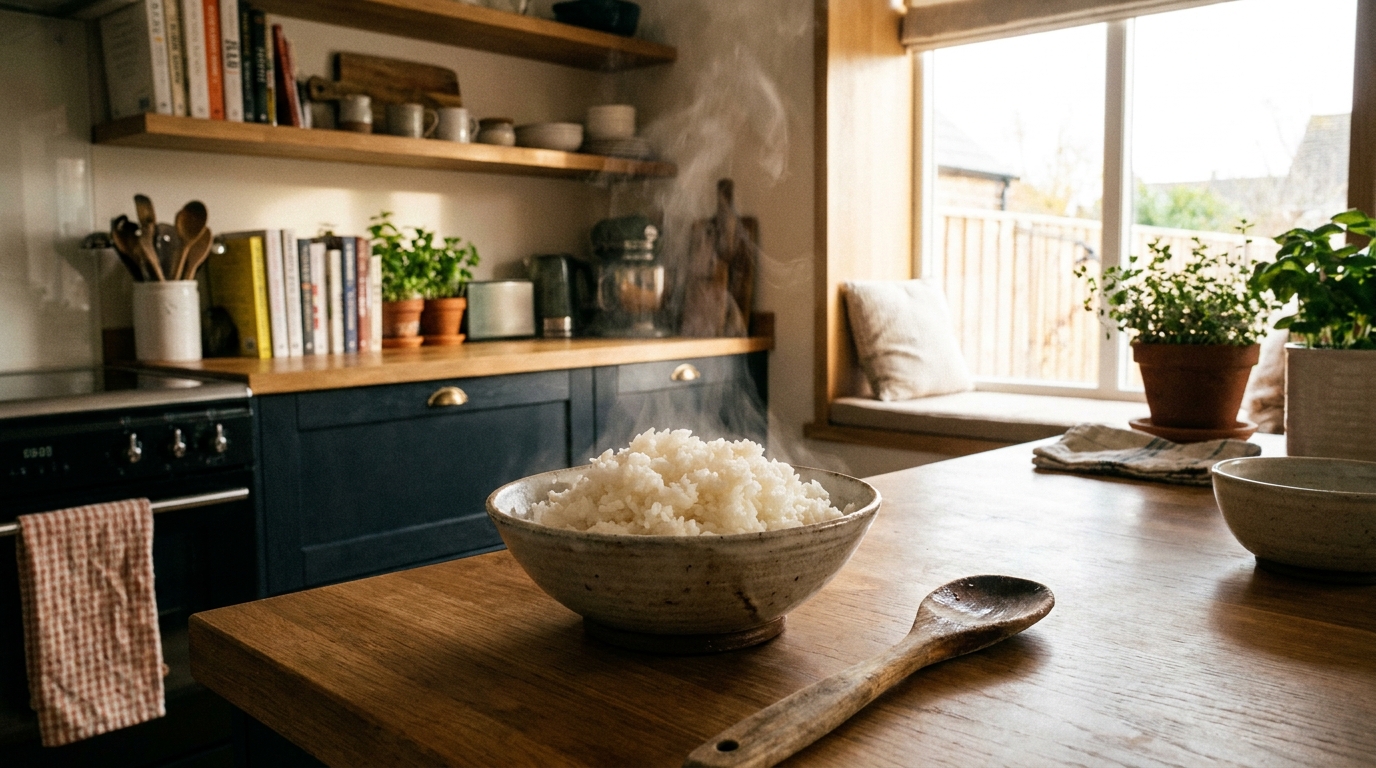
How to Cook Perfect Rice Every Time
Rice sounds simple until you end up with a sticky blob that could patch drywall. Been there. I once ruined three pots in one week because I thought “eh, close enough” counted as measuring water. Spoiler: it doesn’t.
The good news? Cooking perfect rice every time isn’t hard once you understand a few basics. You don’t need a fancy kitchen or chef-level skills. You just need the right ratio, the right timing, and a little patience. Yeah, patience—the ingredient nobody likes to measure :/
Whether you cook white rice, brown rice, jasmine rice, or basmati rice, this guide will help you nail fluffy, delicious rice without stress.
Why Rice Goes Wrong So Often
Rice looks easy because it only has two main ingredients: rice and water. Yet somehow it still turns into mush, crunch, or a burnt science experiment. Ever wondered why?
Most rice problems happen because people:
- Use too much water
- Stir the rice too much
- Lift the lid constantly
- Skip rinsing
- Rush the resting time
Rice needs consistency. Treat it like a tiny kitchen diva and it rewards you with fluffy perfection.
Choose the Right Type of Rice
Different rice types cook differently. You can’t treat basmati like sushi rice and expect magic to happen. That’s like wearing flip-flops in a snowstorm and acting surprised.
White Rice
White rice cooks quickly and works with almost anything.
Best for:
- Stir-fries
- Curries
- Everyday meals
Jasmine Rice
Jasmine rice smells amazing and has a soft texture.
Best for:
- Thai dishes
- Fried rice
- Grilled meats
Basmati Rice
Basmati rice stays long and fluffy when cooked properly. IMO, it’s the king of rice for curries.
Best for:
- Indian food
- Pilaf
- Meal prep
Brown Rice
Brown rice contains more fiber and nutrients, but it takes longer to cook.
Best for:
- Healthy bowls
- Meal prep
- Hearty dishes
Sushi Rice
Sticky by design. Don’t panic when it clumps together—that’s literally its job 🙂
Best for:
- Sushi
- Rice bowls
- Japanese dishes
Always Rinse Your Rice
This step changes everything.
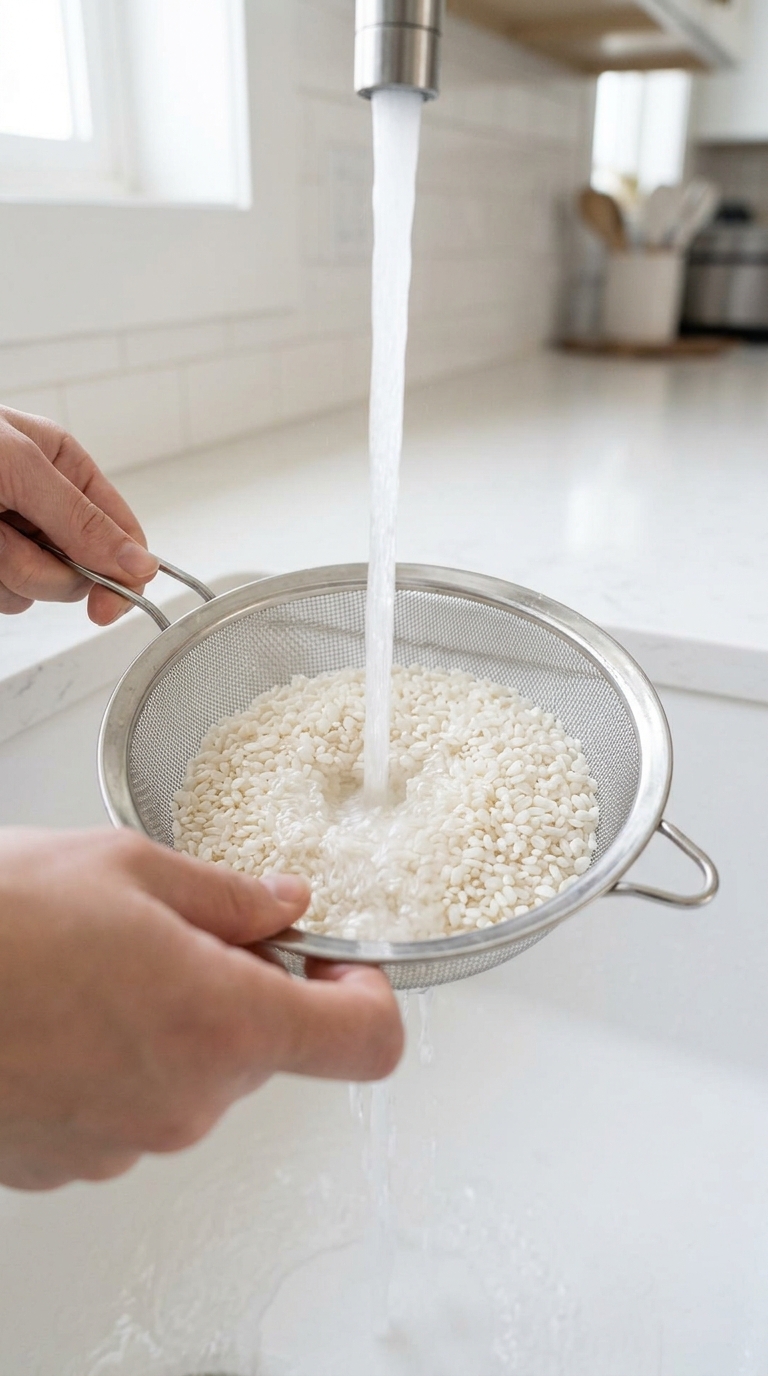
Rinsing rice removes excess starch, which helps prevent gummy, sticky rice. I skipped this step for years because I felt lazy. Huge mistake.
How to Rinse Rice Properly
- Put rice in a bowl
- Add cold water
- Swirl the rice with your hand
- Drain the cloudy water
- Repeat 2–4 times
Once the water looks mostly clear, you’re good to go.
Ever noticed restaurant rice looks cleaner and fluffier? Yeah, this is one reason why.
The Perfect Rice-to-Water Ratio
This part matters more than people think. Guessing the water amount usually ends badly.
Here’s a simple guide:
| Rice Type | Rice | Water |
|---|---|---|
| White Rice | 1 cup | 2 cups |
| Jasmine Rice | 1 cup | 1¾ cups |
| Basmati Rice | 1 cup | 1½ cups |
| Brown Rice | 1 cup | 2½ cups |
| Sushi Rice | 1 cup | 1¼ cups |
Measure carefully. Eyeballing it works for experienced cooks, but beginners should stick with measuring cups.
FYI, humidity and stove strength can slightly affect cooking, so don’t panic if you need tiny adjustments over time.
How to Cook Rice on the Stove
The stovetop method gives you excellent results when you follow the process properly.
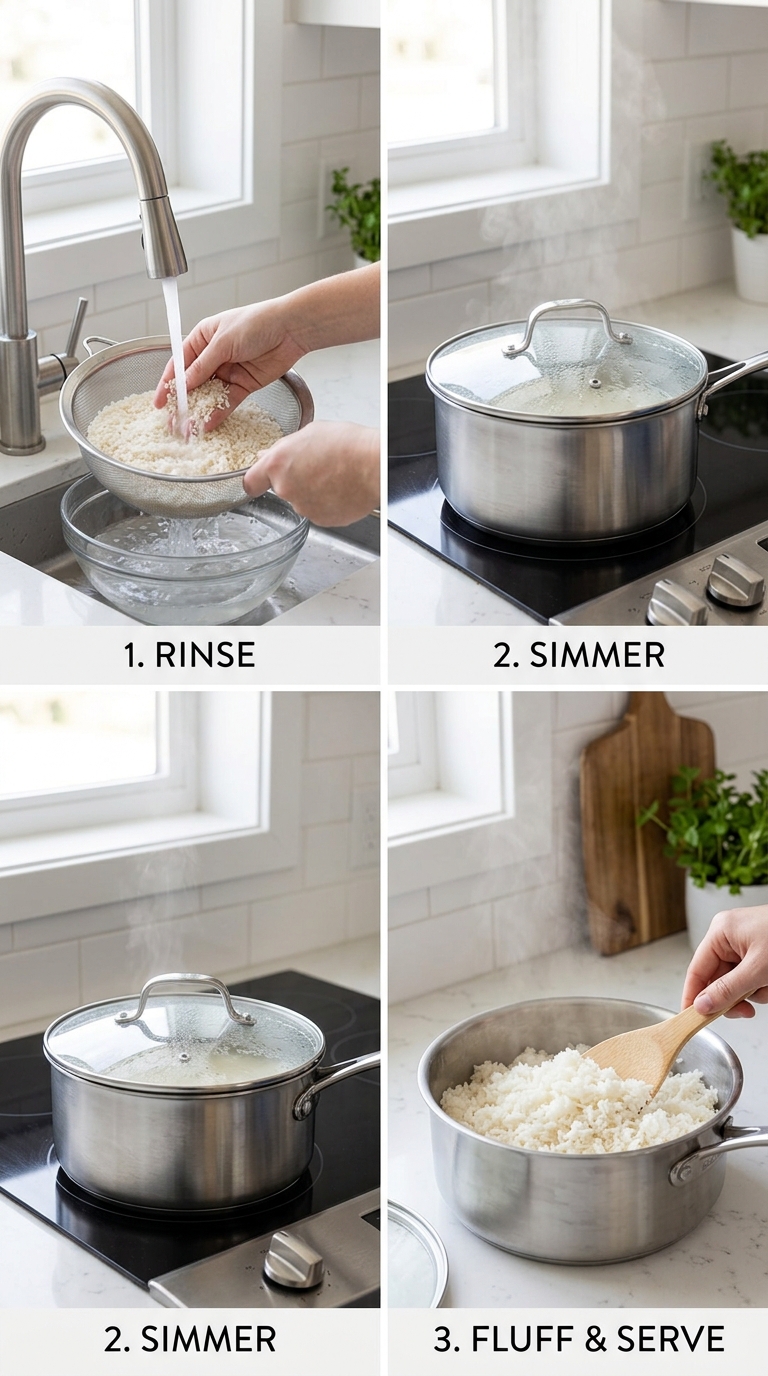
Step 1: Combine Rice and Water
Add rinsed rice and water to a pot. Use a pot with a tight-fitting lid.
You can also add:
- A pinch of salt
- A teaspoon of butter
- A splash of oil
These extras improve flavor without much effort.
Step 2: Bring It to a Boil
Turn the heat to medium-high and bring the water to a boil.
Once it boils, reduce the heat immediately. Don’t let it rage like a volcano for five minutes while you scroll TikTok.
Step 3: Cover and Simmer
Put the lid on and lower the heat.
Cooking times:
- White rice: 15–18 minutes
- Jasmine rice: 12–15 minutes
- Basmati rice: 10–15 minutes
- Brown rice: 35–45 minutes
Step 4: Don’t Touch the Lid
Seriously. Leave it alone.
Every time you lift the lid, steam escapes. Steam cooks the rice. No steam equals uneven rice. Science strikes again.
Step 5: Let It Rest
After cooking, turn off the heat and let the rice sit for 10 minutes.
This resting stage helps the moisture distribute evenly. Skipping this step creates wet rice on the bottom and dry rice on top.
Step 6: Fluff with a Fork
Use a fork instead of a spoon.
A spoon crushes the grains, while a fork separates them gently. Tiny detail, big difference.
How to Cook Rice in a Rice Cooker
Rice cookers feel like cheating, honestly. Press one button and suddenly you look competent.
Why Rice Cookers Work So Well
Rice cookers:
- Maintain consistent heat
- Shut off automatically
- Reduce burning risks
- Keep rice warm
If you eat rice often, a rice cooker saves time and stress.
Basic Rice Cooker Steps
- Rinse the rice
- Add rice and water
- Close the lid
- Press cook
- Let the rice rest after cooking
That’s it. Modern technology really said, “You struggle enough already.”
Common Rice Mistakes to Avoid
Even experienced cooks mess up rice sometimes. Here are the biggest mistakes people make.
Using Too Much Water
Too much water creates mushy rice.
If your rice looks like oatmeal, excess water caused the problem.
Cooking on High Heat
High heat burns the bottom before the top cooks properly.
Low and steady heat wins every time.
Stirring the Rice
Stirring releases starch and makes rice sticky.
Leave it alone while it cooks.
Skipping the Resting Time
Resting helps finish the cooking process naturally.
Think of it like letting steak rest after cooking. Same idea.
Using the Wrong Pot
Thin pots burn rice easily.
Use a heavier pot with a solid lid for better results.
How to Fix Bad Rice
Okay, so your rice turned out weird. It happens.
Rice Too Wet?
Try this:
- Remove the lid
- Cook on very low heat for 2–3 minutes
- Let excess moisture escape
Rice Too Dry?
Add:
- 2 tablespoons of water
- Cover the pot
- Steam for 5 minutes
Burnt Bottom?
Don’t scrape it.
Transfer the good rice to another bowl immediately. Scraping spreads the burnt flavor everywhere. Learned that lesson the hard way.
Tips for Extra Flavorful Rice
Plain rice works fine, but flavorful rice tastes way better.
Use Broth Instead of Water
Chicken or vegetable broth adds depth instantly.
Add Aromatics
Try adding:
- Garlic
- Onion
- Bay leaves
- Cardamom
- Cinnamon sticks
Toast the Rice First
Cook dry rice in a little butter or oil before adding water.
This adds a nutty flavor and improves texture.
Add Fresh Herbs
Fresh herbs brighten rice beautifully.
Good options include:
- Cilantro
- Parsley
- Green onions
Best Rice for Different Dishes
Choosing the right rice improves the whole meal.
For Curries
Use basmati rice because it stays fluffy and separate.
For Fried Rice
Use day-old jasmine rice.
Fresh rice turns soggy during frying. Cold leftover rice works much better.
For Sushi
Use sushi rice because it becomes sticky enough to hold shape.
For Healthy Meals
Use brown rice for extra fiber and nutrients.
How to Store and Reheat Rice Safely
Rice safety matters more than people realize.
Storing Cooked Rice
- Cool rice quickly
- Store in airtight containers
- Refrigerate within 1 hour
Cooked rice usually lasts 3–4 days in the fridge.
Reheating Rice
Add a splash of water before reheating.
Microwave in short bursts while covering the bowl lightly.
This keeps the rice soft instead of turning it into tiny edible rocks.
Can You Freeze Rice?
Absolutely.
Frozen rice saves time during busy weeks.
How to Freeze Rice
- Let rice cool completely
- Portion into freezer bags
- Remove excess air
- Freeze for up to 2 months
Reheat directly from frozen with a little water.
Meal prep fans love this trick because it makes weeknight dinners ridiculously easy.
The Secret to Restaurant-Style Rice
Ever wondered why restaurant rice tastes better?
Restaurants usually:
- Rinse rice thoroughly
- Measure carefully
- Let rice rest
- Use better-quality rice
- Add small amounts of fat or broth
That’s really it. No mysterious wizardry involved.
Quality ingredients also matter. Cheap rice often breaks apart more easily and cooks unevenly.
Final Thoughts on Cooking Perfect Rice Every Time
Cooking perfect rice every time comes down to a few simple habits: rinse the rice, measure properly, keep the lid closed, and let the rice rest. Those four steps solve most rice problems immediately.
Don’t stress if your first few attempts flop. Every home cook ruins rice at least once. Some of us ruin it dramatically enough to trigger the smoke alarm. Character building, apparently.
Once you master rice, weeknight meals become faster, cheaper, and way more satisfying. So grab a pot, trust the process, and make some fluffy rice that actually deserves a second helping.