
How to Cut Vegetables Like a Chef
Ever watch a chef slice an onion in ten seconds and wonder if they secretly signed a contract with the vegetable gods? Meanwhile, you’re wrestling a bell pepper across the cutting board and questioning your life choices.
The good news? Learning how to cut vegetables like a chef has very little to do with natural talent and everything to do with technique. Once you understand a few basic principles, you’ll chop faster, safer, and more consistently.
I remember my first attempts at vegetable prep. My carrots looked like abstract art, and my onions ranged from giant chunks to microscopic bits. After practicing a few simple techniques, everything changed. Let’s talk about how you can improve your knife skills without attending culinary school.
Why Proper Vegetable Cutting Matters
Many beginners focus only on recipes. They overlook knife skills completely.
That’s a mistake.
Uniform vegetable cuts help food cook evenly, improve presentation, and make meal preparation faster. Ever wonder why restaurant vegetables look so perfect? Consistent cuts create consistent cooking.
Imagine cooking large and tiny carrot pieces together. The small pieces turn mushy before the large pieces finish cooking. Nobody wants that.
Benefits of Better Knife Skills
Good cutting techniques help you:
- Cook food evenly
- Improve food presentation
- Reduce preparation time
- Increase kitchen confidence
- Improve safety
Better knife skills make every recipe easier.
Start with the Right Knife
Many people blame themselves when their cuts look messy. Often, the knife causes the problem.
The Best Knife for Cutting Vegetables
A chef’s knife works best for most vegetables.
A good chef’s knife usually measures between 8 and 10 inches. It handles onions, carrots, potatoes, peppers, and herbs with ease.
Sharp vs Dull Knives
This surprises many beginners.
Sharp knives are safer than dull knives.
A dull knife slips more often because it struggles to cut through food. A sharp knife cuts cleanly and predictably.
I avoided sharpening my knives for years because I felt intimidated. Looking back, that decision created far more frustration than sharpening ever did.
Set Up Your Cutting Station Properly
Before you start chopping, create a stable workspace.
Secure Your Cutting Board
Place a damp kitchen towel under your cutting board.
This simple trick prevents the board from sliding around.
Trust me, chasing a moving cutting board while holding a knife doesn’t qualify as a fun kitchen activity.
Organize Before You Cut
Gather:
- Vegetables
- Knife
- Cutting board
- Bowl for scraps
- Container for prepared vegetables
This setup keeps your workflow smooth and efficient.
Learn the Proper Knife Grip
Most beginners hold knives incorrectly.
A better grip gives you more control immediately.
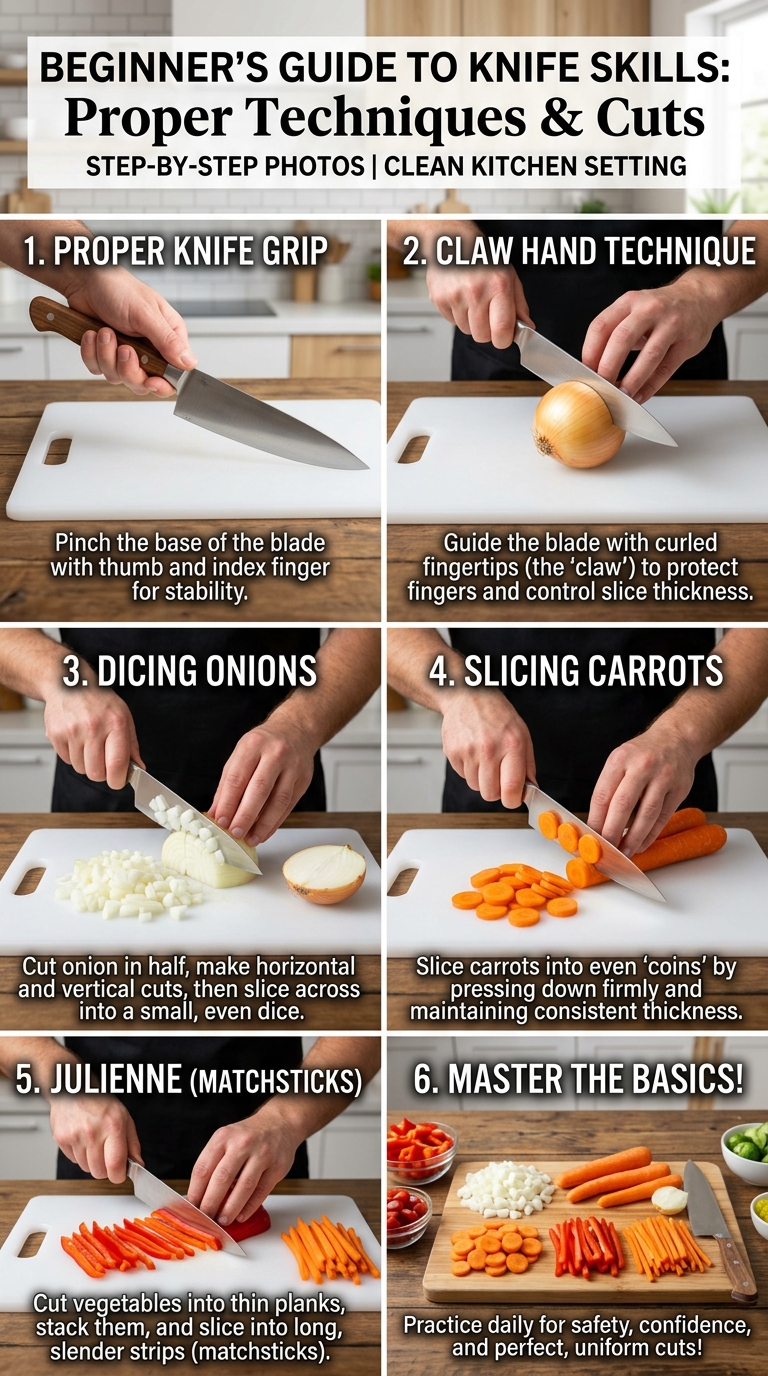
The Pinch Grip
Professional chefs often use the pinch grip.
Here’s how:
- Grip the blade near the handle using your thumb and index finger.
- Wrap your remaining fingers around the handle.
- Keep your grip firm but relaxed.
The knife becomes an extension of your hand.
Why the Pinch Grip Works
The pinch grip provides:
- Better control
- More accuracy
- Less hand fatigue
- Faster cutting
Ever notice how chefs move so effortlessly? This grip plays a huge role.
Protect Your Fingers Like a Chef
Knife skills mean nothing if your fingers constantly feel endangered.
Use the Claw Technique
Curl your fingertips inward while holding vegetables.
Your knuckles should guide the knife blade.
This technique protects your fingertips while maintaining control.
Common Finger Mistakes
Avoid:
- Flat fingertips
- Loose hand positioning
- Rushing through cuts
Slow and safe beats fast and injured every single time.
Master the Basic Vegetable Cuts
You don’t need twenty cutting styles.
Start with a few fundamental cuts.
Dice
A dice creates small cube-shaped pieces.
Chefs use diced vegetables for:
- Soups
- Sauces
- Stir-fries
- Salads
How to Dice an Onion
- Cut the onion in half.
- Leave the root intact.
- Make horizontal cuts.
- Make vertical cuts.
- Slice across the onion.
The onion naturally forms neat cubes.
This technique felt like magic the first time I learned it.
Slice
Slicing creates thin, flat pieces.
Use slices for:
- Cucumbers
- Tomatoes
- Onions
- Zucchini
Julienne
Julienne cuts create thin matchstick-shaped pieces.
These cuts work well in:
- Stir-fries
- Salads
- Garnishes
Chiffonade
Use chiffonade for leafy greens and herbs.
Simply:
- Stack the leaves.
- Roll them tightly.
- Slice thin ribbons.
The result looks surprisingly professional.
How to Cut Common Vegetables Like a Chef
Different vegetables require slightly different approaches.
Cutting Onions
Onions intimidate beginners more than almost any vegetable.
To cut onions efficiently:
- Slice off one end
- Peel the skin
- Keep the root attached
- Dice or slice as needed
Preventing Tears
Try these tips:
- Use a sharp knife
- Chill onions briefly
- Cut near ventilation
No method eliminates tears completely, but they help.
Cutting Carrots
Start by trimming both ends.
For stability:
- Cut carrots into sections.
- Slice sections lengthwise.
- Cut strips or cubes.
Flat surfaces always improve safety.
Cutting Bell Peppers
Bell peppers become much easier when you remove the core first.
Slice around the stem and remove the seed cluster.
Then flatten the pepper sections before slicing.
This method wastes less pepper and saves time.
Cutting Potatoes
Potatoes roll easily.
Create a flat base first.
Then cut:
- Cubes
- Wedges
- Slices
- Fries
Stable vegetables produce cleaner cuts.
Speed Comes After Accuracy
Many beginners focus on speed immediately.
That’s backwards.
Focus on Consistency First
Consistent cuts matter more than fast cuts.
Practice creating pieces that match in size.
Speed develops naturally through repetition.
Practice Exercises
Try cutting:
- One onion daily
- Two carrots daily
- One bell pepper daily
Five minutes of practice builds skill surprisingly fast.
Common Vegetable Cutting Mistakes
Everyone makes mistakes while learning.
I certainly did.
Using Excessive Force
Let the knife do the work.
Sharp knives require less pressure.
Pushing harder often reduces control.
Looking Away
Always watch the blade.
Multitasking and knife work rarely make a great combination.
Rushing
Speed follows technique.
Technique does not follow speed.
Remember that whenever you feel tempted to rush.
Keep Your Knife Sharp
A sharp knife transforms the entire cutting experience.
Signs Your Knife Needs Sharpening
Your knife needs attention if it:
- Squashes tomatoes
- Tears herbs
- Requires extra force
- Slides off vegetables
Sharpening Options
You can use:
- Honing rods
- Manual sharpeners
- Whetstones
- Professional sharpening services
IMO, professional sharpening works wonderfully for beginners.
Practice with Easy Vegetables First
Some vegetables challenge beginners more than others.
Start simple.
Beginner-Friendly Vegetables
Practice with:
- Cucumbers
- Zucchini
- Potatoes
- Carrots
- Bell peppers
These vegetables help build confidence.
Harder Vegetables
Save these for later:
- Butternut squash
- Cabbage
- Sweet potatoes
- Large onions
They require slightly more control and strength.
Why Uniform Cuts Improve Cooking
Professional chefs obsess over consistency for a reason.
Even Cooking
Uniform pieces cook at the same rate.
This improves:
- Texture
- Flavor
- Appearance
Imagine roasting vegetables where some pieces burn while others stay raw. Consistent cuts prevent that problem.
Better Presentation
People eat with their eyes first.
Neat vegetables instantly make meals look more appealing.
You don’t need restaurant-level perfection. You just need consistency.
Building Long-Term Knife Skills
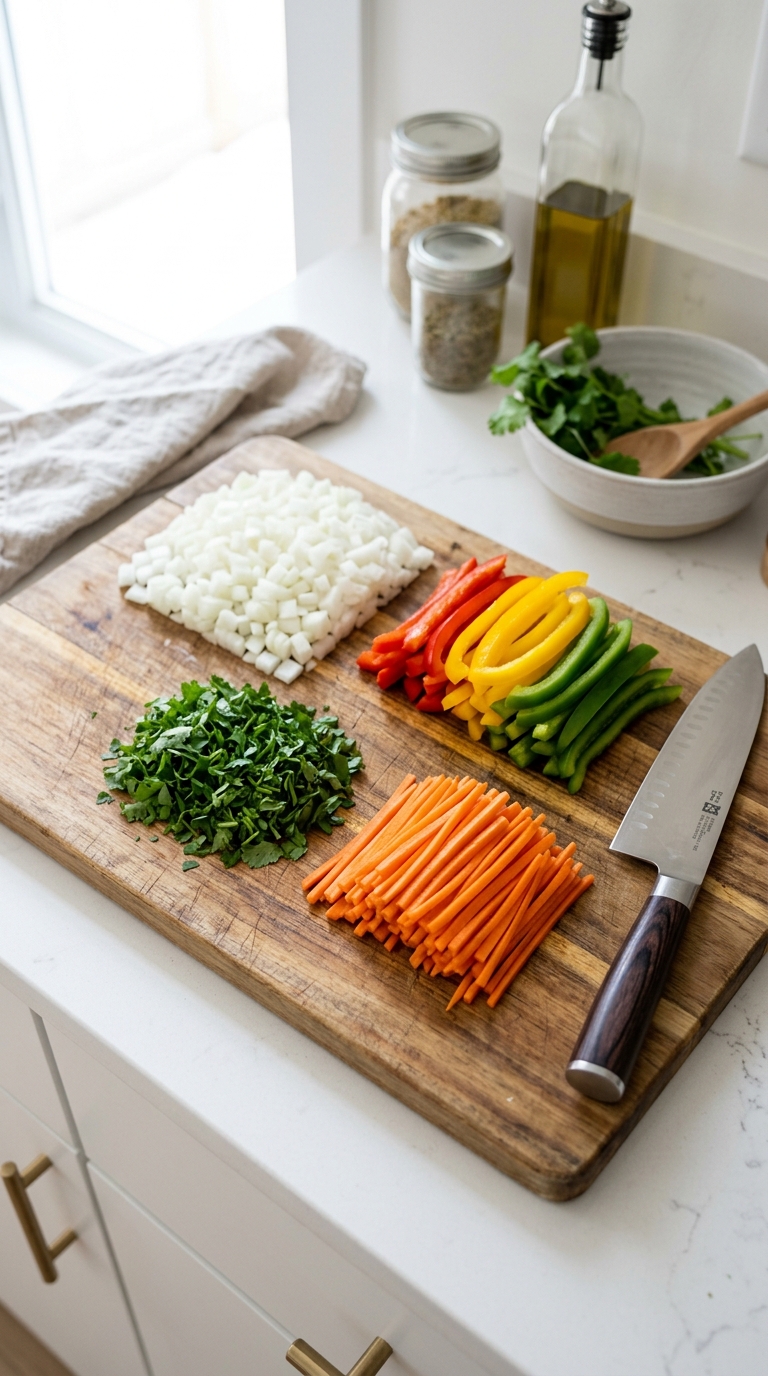
Knife skills improve gradually.
Nobody becomes an expert overnight.
Create a Practice Routine
Try:
- Preparing vegetables daily
- Practicing one cut at a time
- Watching technique-focused tutorials
- Repeating the same vegetables regularly
Small improvements add up quickly.
Stay Patient
Every skilled cook once struggled with basic knife work.
The difference is simple.
They kept practicing.
FYI, even professional chefs occasionally produce imperfect cuts. They just recover faster 🙂
Final Thoughts on How to Cut Vegetables Like a Chef
Learning how to cut vegetables like a chef starts with mastering a few simple fundamentals. Use a sharp knife, create a stable workspace, learn the pinch grip, protect your fingers with the claw technique, and practice basic cuts consistently.
Focus on accuracy before speed. Build confidence through repetition. Pay attention to consistency rather than perfection.
Before long, you’ll move through vegetables with far more confidence and control. And who knows? The next time someone watches you dice an onion, they might wonder if you secretly signed that contract with the vegetable gods after all.